
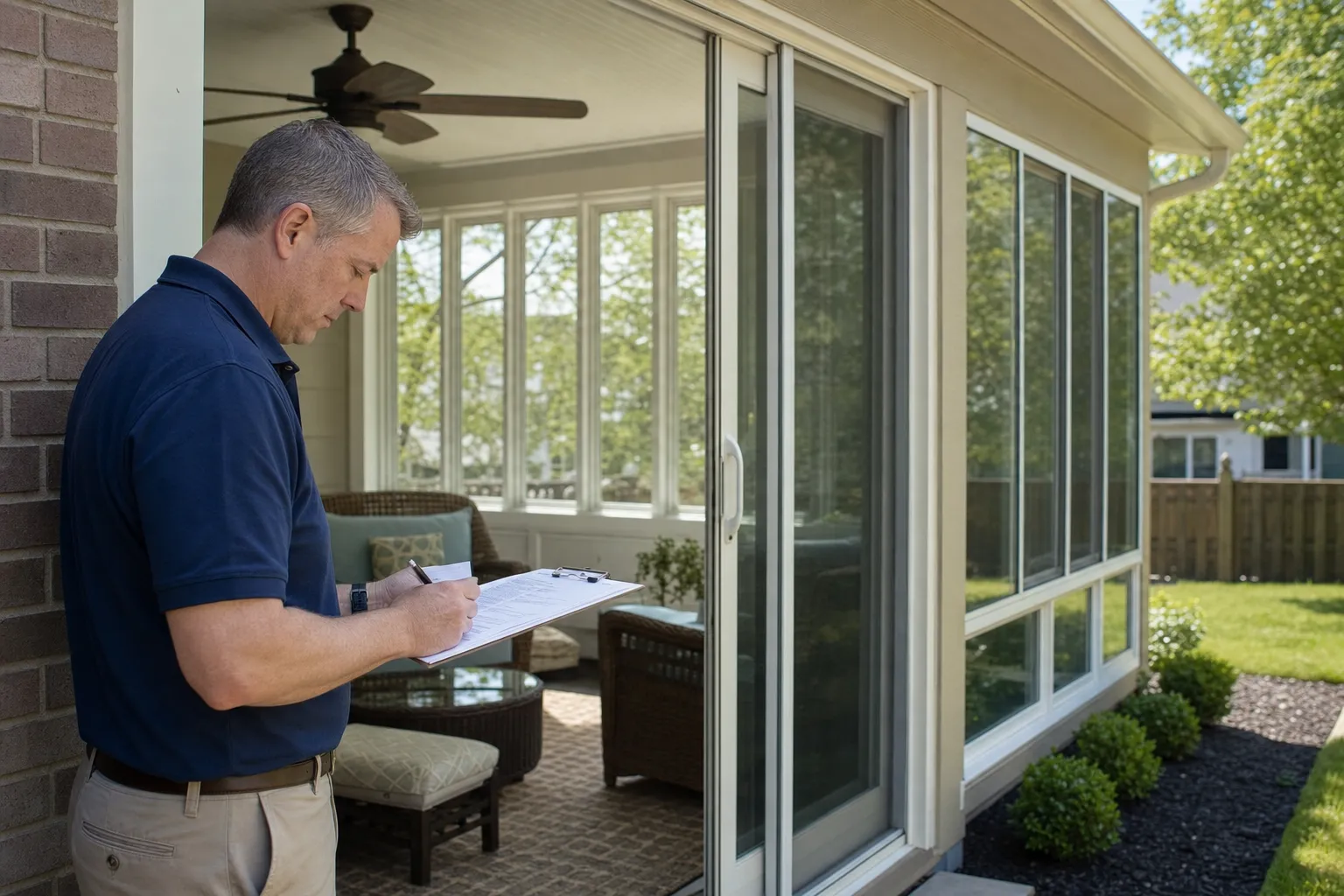
Yes, a sunroom can raise home value, mainly when it is a permitted, finished, permanently heated four-season room that an appraiser may count as living space. How much value it adds depends on three things: whether the room is heated and finished like the rest of the house, whether it was built with a permit, and how well it was built. A three-season room usually adds less predictable value because it isn't designed for winter use and is often treated more like an enclosed porch. An unpermitted room makes the value even harder to predict, and it can complicate the inspection, the appraisal, or the closing when you sell.
Value is set by appraisers and buyers, not by what the room cost to build. An appraiser compares your home to similar nearby sales, and a buyer decides what the room is worth to them during a showing. If you're planning a sunroom addition in Brownsburg, settle those three factors before construction starts. Terry Brodnik Group - Contracting and Home Services is a remodeler serving homeowners in Brownsburg, IN.
Does a sunroom count as square footage on an appraisal?
A sunroom usually counts as gross living area only when it is finished, heated by a permanent system, and connected to the main house like any other room. Gross living area (GLA) is the finished, above-grade living space an appraiser measures, and GLA is one of the main drivers of a home's appraised value.
Many appraisers follow the lender-side standard for measuring homes. You can read the Fannie Mae guidance on measuring gross living area, which references the ANSI Z765 measuring standard. In plain terms, a room generally needs to pass a three-part test. It should be finished, with walls, floor, and ceiling at a level similar to the rest of the house. It should be heated by a permanent system that serves the room, not a plug-in space heater. And it should be connected, with direct access from the house, so it functions as part of the living space.
Rooms that fail this test are often listed as a separate feature, such as a porch or enclosed patio. That kind of space may still add some value, but usually less than the same square footage of true living space.
Each appraiser also uses professional judgment and recent comparable sales nearby. No type of room guarantees a set dollar amount, so treat the GLA test as a way to improve your odds rather than a promise of a specific number.
Four-season vs three-season sunroom: which adds more home value?
A four-season sunroom usually adds more home value than a three-season room because a four-season room is built and heated for year-round use and is more likely to count as living space.
A four-season room has insulated walls, roof, and floor; thermal glass (insulated, multi-pane glazing that slows heat loss); and heating and cooling that work in every season. A three-season room typically uses lighter framing and glass, often has no permanent heat, and is best suited to spring through fall.
That difference shows up in how buyers read the space. A room they can sit in during January feels like part of the house. A seasonal room feels more like a covered porch, pleasant for part of the year and closed off for the rest.
| Factor | Four-season sunroom | Three-season sunroom |
|---|---|---|
| Year-round use | Designed for use in every season | Best suited to spring through fall |
| Insulation | Insulated walls, roof, and floor | Lighter construction, limited insulation |
| Permanent heat | Yes, part of the design | Often none |
| Likely appraisal treatment | More likely to count as gross living area | Often listed as a porch or enclosed patio |
| Buyer perception | Feels like an added room of the house | Feels like a seasonal or outdoor-type space |
A three-season room still has appeal as a lifestyle feature, especially if you mainly want a screened, bug-free spot for warm evenings. Its effect on resale value is just harder to predict.
How Central Indiana weather affects sunroom value
Brownsburg has cold winters and hot, humid summers, so a sunroom only adds steady value when the room stays comfortable in both seasons. A poorly insulated sunroom can feel too cold in winter and too hot in summer, which often leaves the room unused and less appealing to buyers.
In this climate, three features carry most of the weight. Insulated glass limits heat loss in winter and heat gain in summer. The floor and roof need proper insulation too, since a cold slab or thin roof panel can undo the benefit of good windows. And the heating and cooling should be sized for a room with lots of glass, because glass walls gain and lose heat faster than framed, insulated walls.
Comfort problems are hard to hide during a showing. Drafts, condensation on the glass, or a room that feels very different from the rest of the house can signal that the sunroom was built as an afterthought. A room that matches the temperature of the adjoining kitchen or living room makes a much stronger case that it's real living space.
How does permit status affect sunroom value in Brownsburg?
A permitted sunroom is documented as a legal part of the home, while an unpermitted sunroom can lower buyer confidence, complicate the appraisal, and slow down a sale. A building permit means the plans were reviewed and the work was inspected at key stages, such as footings (the concrete base that carries the structure's weight), framing, and electrical.
Which office issues the permit depends on your address. Addresses inside town limits generally go through the Town of Brownsburg for building permits, while unincorporated areas generally go through Hendricks County. Confirm which office covers your property before you plan the project.
Records matter at sale time. An appraiser or buyer may check public permit records, and square footage that doesn't match those records can raise questions about what was built and whether it was inspected.
What problems can an unpermitted sunroom cause at closing?
An unpermitted sunroom can lead to repair requests, lower offers, appraisal adjustments, or delays when a buyer's inspector or lender spots it. Possible outcomes include:
- A home inspector may flag the work as possibly not meeting building code.
- An appraiser may leave the space out of living area or add a note about it, which can affect the loan amount.
- A buyer can ask for repairs, a price reduction, or proof of permits before moving forward.
- The closing can be delayed while the parties sort out documentation or corrections.
Indiana sellers complete a residential sales disclosure form. If your home has past unpermitted work, ask your real estate agent or a real estate attorney how to handle that work on the disclosure. We're remodelers, not attorneys, so treat this as a prompt to get qualified advice.
Can you get a permit for a sunroom after it is built?
In many cases a homeowner can ask the local building department about permitting existing work, but the process and requirements vary, and walls may need to be opened for inspection.
Start by contacting the permit office that covers your address and asking what that office requires for work that was completed without a permit. The office may ask for drawings, an inspection, or both.
A contractor may then need to document the existing construction or correct parts of the sunroom so the work can pass inspection. That can mean exposing framing, wiring, or the foundation connection so an inspector can see them. Permitting before you build is generally simpler, because inspections happen while the framing and wiring are still visible.
Which finish details help a sunroom hold its value?
A sunroom holds its value best when the room looks and feels like it was built with the house, not attached as an afterthought. Appraisers and buyers read finish details as evidence of how carefully the whole room was built.
Five details get the most attention:
- Matching exterior. Rooflines, siding, and trim that match the house help the addition blend in from the curb and the backyard.
- Quality glass and windows. Well-made insulated windows resist drafts and fogging. Fogged glass usually means a failed seal between panes, and buyers tend to read it as a replacement cost.
- Proper flashing and a sealed roof connection. Flashing is the metal or membrane that directs water away from the joint where the sunroom roof meets the house. That joint is a common leak point, and inspectors look at it closely.
- Interior finish. Drywall or quality paneling, real flooring, electrical outlets, and lighting signal true living space rather than an enclosed porch.
- Flooring that relates to the house. Flooring that matches or complements the adjoining room makes the transition feel planned.
Poor workmanship works in the opposite direction. Water stains, a sagging roof panel, or fogged glass can turn the sunroom from an asset into a repair item on a buyer's inspection report.
How to plan a sunroom addition that adds resale value
To protect resale value, decide on a four-season design, pull permits before work begins, and hire a remodeler who builds the room to the same standard as the house. These five steps put those decisions in order:
- Decide how the room will be used year-round. Planned use drives the insulation, glass, and heating and cooling choices. A room meant for a January morning coffee needs a different build than a summer-only porch.
- Confirm the permit process with the right local office. Check whether your address falls under the Town of Brownsburg or Hendricks County, and review any HOA rules that apply in your subdivision, since some associations have their own approval steps for additions.
- Ask how the room will tie into the existing house. That covers how the new roof connects to the existing roof, how the foundation will be built and attached, and whether the existing HVAC system can serve the room or a separate system is needed.
- Keep your records together. Store the permit, inspection records, and plans in one folder. Those documents help show future buyers and appraisers that the sunroom is legal, inspected living space.
- Check what nearby homes include if resale is the main goal. A local real estate agent or appraiser can tell you what similar homes in your area offer, which helps you avoid building more room than the market expects.
The bottom line on sunroom value in Brownsburg
Permitted, heated, finished four-season sunrooms are the most likely to count as appraised living space and appeal to buyers. Three-season and unpermitted rooms add less predictable value and can create friction at sale time, which is why permit status and build quality matter more than the label "sunroom."
If you're leaning toward a four-season design and aren't sure which permit office covers your address, we'd rather talk it through with you before plans are drawn than after.