
Yes, if your basement project includes electrical, plumbing, HVAC, framing, or egress work, you should hire a contractor to finish your basement in Brownsburg. All of those trades require permits and inspections through Hendricks County, and a licensed remodeler is the qualified party to pull and schedule them. Skipping permits creates an unpermitted space you must disclose at resale. Unpermitted work can create complications with a buyer's lender or inspector that affect the path to closing. A permitted basement finish adds appraised, recognized value to your home. An unpermitted one does not. Cosmetic tasks like painting or installing trim generally don't require a permit, but the moment a project touches a utility system or structural element, you're in permitted-work territory.
What work in a basement finish actually requires a permit in Brownsburg?
In Brownsburg, any basement work that adds or alters electrical wiring, plumbing, HVAC, structural framing, or egress windows requires a permit issued through Hendricks County. Permits aren't optional extras. They're the legal gateway to inspections that confirm the work is safe and code-compliant.
Here are the five most common permit-triggering trades in a basement finish:
- Rough-in wiring, panel connections, outlet placement, and lighting circuits all require an electrical permit and trigger inspections at multiple stages before walls are closed.
- Adding a basement bathroom, a wet bar, or any new drain or supply line requires a separate plumbing permit and a rough-in inspection.
- Extending ductwork, adding supply and return registers, or installing any mechanical equipment in the basement requires a mechanical permit.
- New partition walls, load-bearing changes, and beam work can require a building permit depending on scope.
- Cutting an opening for a bedroom egress window is a structural change that must meet Indiana Residential Code minimum opening dimensions to be legal.
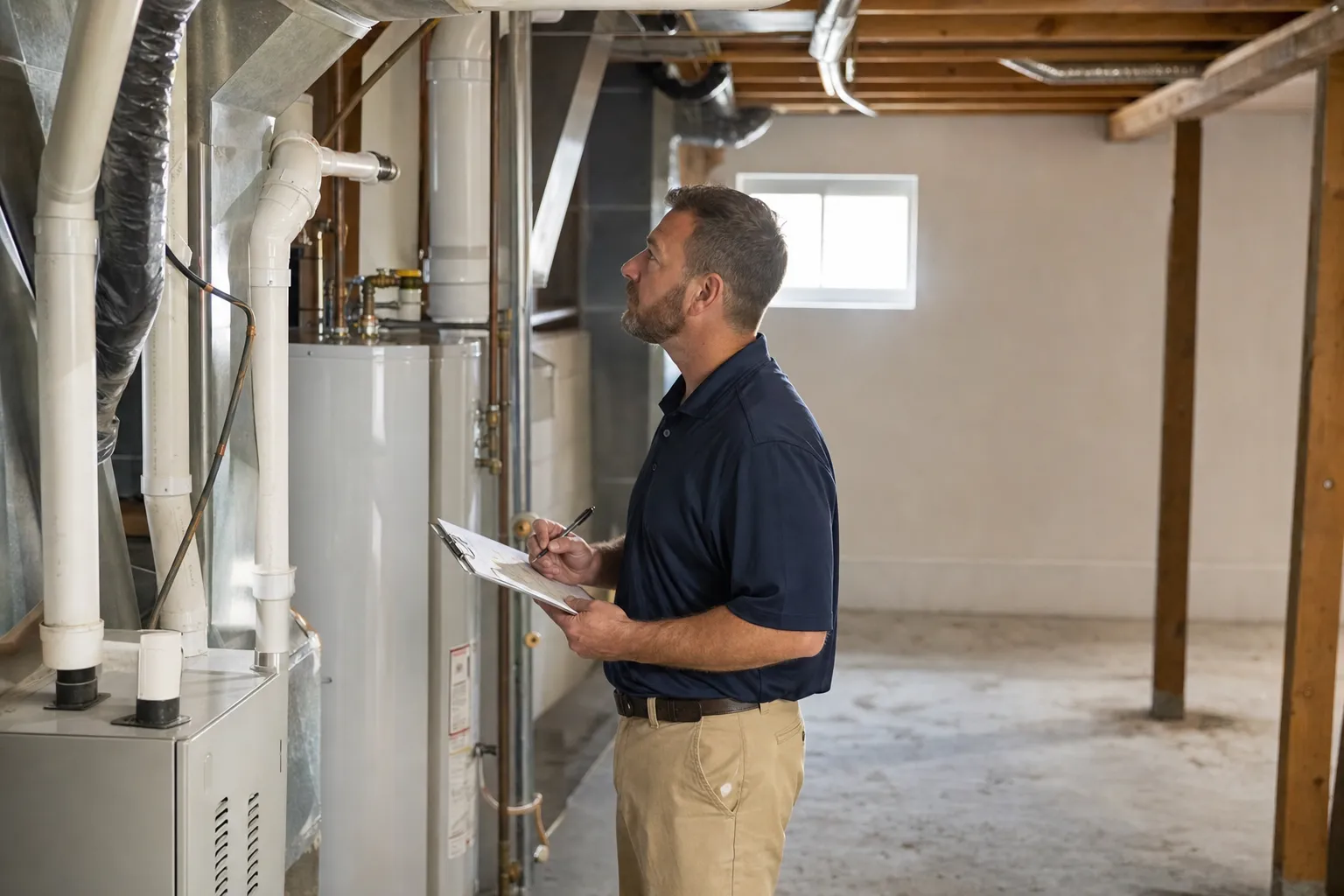
Each of these inspections happens at a specific stage of construction. Electrical rough-in, for example, is inspected before insulation goes in and before drywall covers the wiring. Miss that window and the county can't verify what's inside the wall. We've seen projects where that missed inspection meant opening up finished walls — not a situation anyone wants to be in.
Who is legally allowed to pull a permit for basement work in Hendricks County?
In Hendricks County, licensed contractors, not unlicensed subcontractors or most homeowners, are the qualified parties to pull trade permits for electrical, plumbing, and HVAC work in a basement finish. A licensed remodeler or general contractor coordinates permit applications across all trades in one project, keeping the inspection schedule organized and on track.
Indiana does allow owner-builder permits in some circumstances, but a homeowner who takes that route assumes full legal liability for code compliance. You'd still need to schedule and pass every required inspection, and if the work fails, you're responsible for correcting it and calling for a re-inspection. Inspectors are assigned by Hendricks County, and the permit holder is responsible for scheduling each required inspection at the right construction stage. That's a lot to manage if you're not already familiar with how the county's process runs.
What happens if a subcontractor pulls a permit but is not licensed?
Work performed under an improperly licensed party can create legal and compliance complications with the county. Licensed electrical, plumbing, and HVAC subcontractors hold trade-specific licenses that authorize them to pull permits in their respective trades. A general contractor coordinates those licensed subs and is responsible for the overall project permit. Confirming that everyone on your project holds the correct license before work starts protects you from this problem entirely. It's one of the first things we verify before we bring anyone on a job.
If work is done before an inspection is called, inspectors may require walls to be opened so they can verify what's behind them. That's an expensive correction that a proper permit and inspection schedule prevents.
What are the risks of finishing your basement yourself without permits?
Finishing a basement without permits in Brownsburg creates a legally unpermitted space that carries serious financial and safety consequences. The risks aren't theoretical. They show up at the worst possible time, which is when you're trying to sell.
Indiana law requires sellers to disclose unpermitted improvements on the seller's disclosure form. Hiding them can expose a seller to post-sale legal liability if the buyer discovers the issue after closing. A buyer's lender may refuse to approve the loan if an appraiser flags an unpermitted finished basement. The appraiser can't count unpermitted square footage in the finished area calculation, which directly reduces the appraised value. If the appraisal comes in below the purchase price because of the unpermitted space, the deal can fall apart.
The buyer's home inspector will note the lack of permits in the inspection report. That typically triggers renegotiation, a price reduction, or a demand that the seller address the situation before closing. We hear from homeowners in exactly that position more often than you'd expect.
Beyond the legal and financial risks, uninspected electrical wiring is a fire hazard. HVAC work that bypasses inspection can produce carbon monoxide problems. Those are safety risks that affect the people living in the home now, not just buyers in the future.
Can you get a retroactive permit for an unpermitted basement in Brownsburg?
Retroactive permits may be possible in some cases, but the county may require portions of the finished work to be opened or removed so an inspector can verify what's behind the walls. That can mean exposing wiring or plumbing and paying for repairs, on top of the permit fee. In serious cases, counties can require correction or removal of unpermitted work before issuing a new permit for the project to be rebuilt correctly. Honestly, it's a harder and more expensive road than just doing it right the first time. Contacting Hendricks County Building & Code Enforcement directly is the best way to understand your options for a specific situation.
How does hiring a contractor affect your home's appraised value after a basement finish?
A permitted basement finish completed by a licensed contractor is recognized by appraisers as finished livable square footage, which increases your home's appraised value. An unpermitted finish is typically excluded from that calculation entirely.
Appraisers cross-check county records against what they observe during an inspection. When a finished basement shows up in person but not in county records as permitted finished space, the appraiser flags the mismatch. The space gets treated as unfinished or excluded from the comparable square footage used to determine value. That gap matters more than people expect. Buyers in Brownsburg and Hendricks County pay attention to finished square footage in the listing, and when that number is backed by county records and a clean permit history, it holds up through the appraisal process. When it isn't, it doesn't.
For a full picture of what goes into a properly executed project from start to sign-off, see why a licensed remodeler is the right choice for your basement finishing project in Brownsburg. That page covers scope, trades, and how the whole process comes together.
What does a licensed basement finishing contractor actually manage on your project?
A licensed basement finishing contractor manages every stage of the project, from design and permitting through trade scheduling, inspections, and final punch list, so nothing falls through the cracks. The contractor is the single point of contact for Hendricks County building officials and handles all inspection scheduling directly.
The correct construction sequence for a permitted basement finish is: framing first, then electrical and plumbing rough-in, then HVAC rough-in, then insulation (which has its own inspection in some cases), then drywall, then finish work. Each stage must be inspected and approved before the next stage covers it. A licensed contractor knows that sequence cold and builds the project schedule around it. Skipping ahead, even by a day or two, can mean calling for an inspection on work that's already been covered — and that's when things get expensive.
Licensed contractors also carry general liability insurance and workers' compensation coverage. If a worker is injured on your property, workers' comp covers it. If work causes accidental property damage, general liability covers it. Without that coverage, you can be personally liable.
Does a general contractor or a specialist basement company make more sense?
Either can work well, as long as the contractor holds an active Indiana contractor license and has direct experience pulling permits through Hendricks County. A general contractor who regularly finishes basements already has relationships with licensed electrical, plumbing, and HVAC subcontractors and knows how the county's inspection process runs. A basement-only specialist may offer the same. The licensing, insurance, and permit experience matter more than the company's label. A licensed contractor also spots structural or moisture issues early, before walls are closed, that an untrained eye would miss until the damage is already significant.
When is DIY work acceptable in a basement finishing project?
Cosmetic and finish-level tasks, like painting, installing trim, or laying certain types of flooring, are generally the only basement work that doesn't trigger a permit. Any task that touches a structural element, a utility system, or a fire-safety requirement moves out of DIY territory and into permitted work.
Installing pre-built storage shelving, applying paint, or swapping out finish hardware typically doesn't require a permit. Those tasks don't change how the structure, electrical system, or plumbing system functions.
Even something that looks cosmetic can cross the line. Adding recessed lighting looks like a decorating decision, but it involves electrical rough-in work that requires a permit and inspection. Same goes for a ceiling fan with a new electrical box or any fixture added to a circuit that didn't previously serve that location. We see homeowners surprised by that one pretty regularly.
If you want to take on some of the finish work yourself, painting, flooring, or similar cosmetic tasks, talk through the division of responsibilities with your contractor before signing a contract. Both parties need to be clear on what the licensed contractor will complete and what you'll handle after permitted work is signed off.
How do you choose the right contractor for a basement finish in Brownsburg?
Look for a contractor who holds an active Indiana contractor license, carries current general liability and workers' compensation insurance, and has direct experience pulling permits through Hendricks County. Those three things are non-negotiable starting points.
Here are five questions to ask before signing a basement finishing contract:
- Will you pull all required permits yourself? A qualified contractor should pull every permit the project requires, not hand that responsibility to the homeowner or an unlicensed sub.
- Can you provide references from Hendricks County basement projects that were inspected and signed off? Past permit history in the same county is the clearest proof of relevant experience.
- What does your written contract say about inspection milestones? The contract should name the inspections required and tie payment milestones to inspection approvals, not just calendar dates.
- Who are your licensed subcontractors for electrical, plumbing, and HVAC? Knowing which licensed trades will be on your project lets you verify their licenses independently before work starts.
- What is your process if an inspection fails? Every experienced contractor has a re-inspection story. How they handle a failed inspection tells you how they run a project.
What questions should I ask a contractor before signing a basement finishing contract?
Beyond the five above, ask the contractor to walk you through the inspection sequence they expect for your specific project. A contractor who can name the inspection stages in order and explain why each one happens when it does is demonstrating real permit experience, not just a general claim. Also confirm the contract identifies who is responsible for scheduling each inspection and what happens to the project timeline if an inspection is delayed by the county. A contractor who discourages permits or suggests skipping them is a major red flag. Walk away from that conversation.
The Bottom Line
Hiring a licensed contractor is the right call for any basement finish in Brownsburg that includes electrical, plumbing, HVAC, framing, or egress work. All of those trades require permits, and skipping them puts your home's resale value, your sale timeline, and your family's safety at real risk. A properly permitted finish adds appraiser-recognized value to your home in 2026 and beyond, value that an unpermitted finish simply can't deliver. If you're ready to plan a basement project the right way, start with why a licensed remodeler is the right choice for your basement finishing project in Brownsburg.