
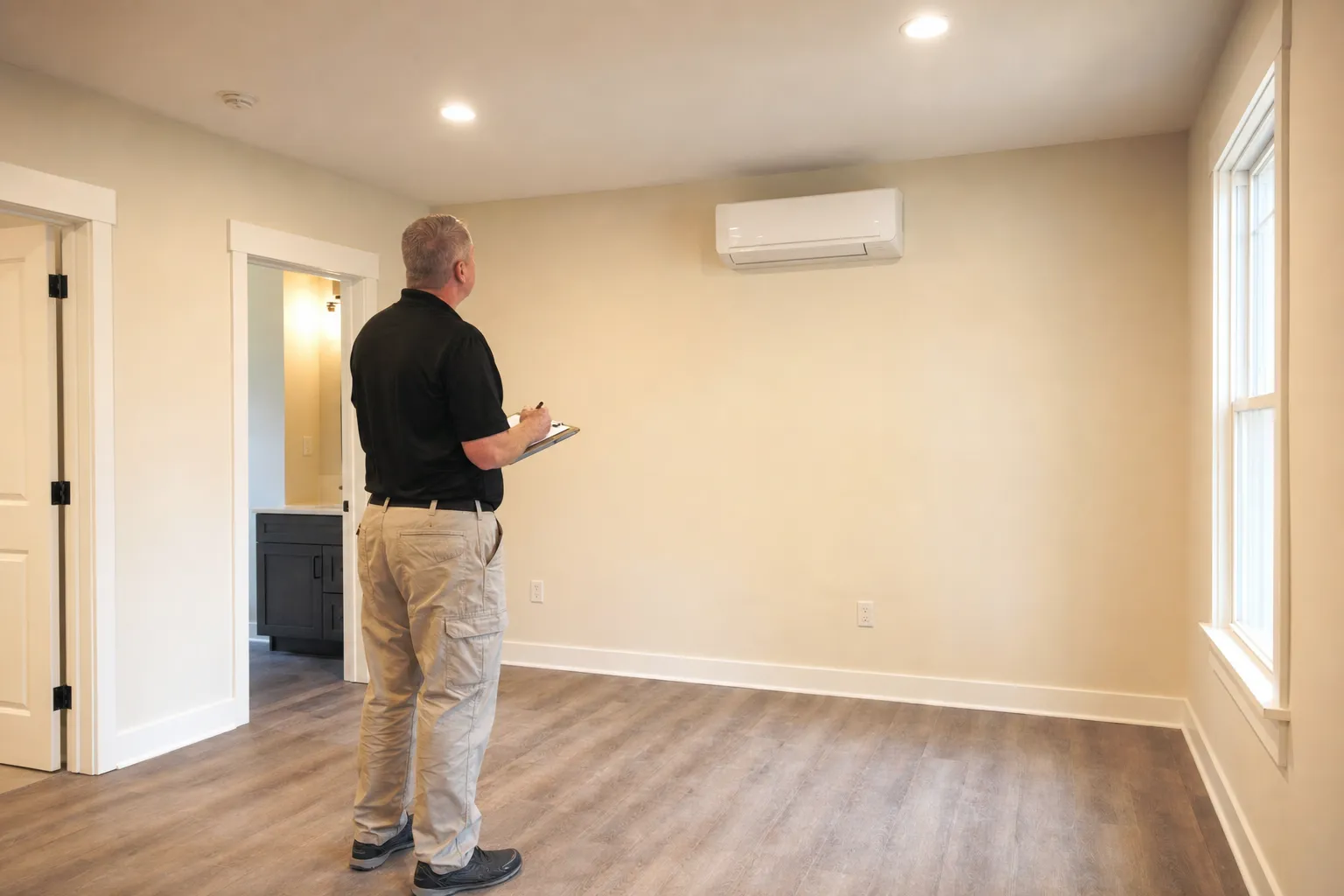
To understand how a garage conversion affects your property taxes, it helps to know which details the assessor reviews. The assessor reclassifies the converted square footage from garage space to finished living area, which carries a higher assessment rate in Indiana. Any HVAC, plumbing, or electrical systems added during the project are recorded as quality and improvement upgrades. The home's overall condition rating is reviewed, and the total room count is updated on the property record card. Each of these factors feeds into Indiana's cost-based assessment formula. No single change drives the outcome alone. The shifts compound each other and together determine the final assessed value for your Brownsburg property.
Before you start, understand that these are not independent line items you can weigh one at a time. They stack. A full conversion that adds square footage, a bathroom, heat, and a bedroom touches every major assessment category at once. We'll walk through each factor below so you know what you're getting into before the tax notice arrives.
How does the assessor reclassify square footage after a garage conversion?
The assessor moves converted garage space from the unfinished or utility category into the finished living area category on your property record. Garage square footage carries a lower value-per-square-foot rate than finished living space inside Indiana's cost-based assessment model. Once the space qualifies as finished living area, the assessor applies a higher base rate to those same square feet.
The change can raise your home's total assessed value even if the physical footprint of the house stays exactly the same. You're not adding land or new walls. You're reclassifying what already exists. That reclassification alone is enough to shift the numbers on your tax notice.
The assessor uses Indiana's cost-based assessment guidelines set by the Indiana Department of Local Government Finance (DLGF) to decide which rate category applies to a given space. Permit records and an on-site or drive-by inspection help the assessor confirm the reclassification is warranted before updating the property record card.
What counts as 'finished living space' in Indiana's assessment rules?
Indiana's DLGF guidelines set minimum standards that push a space into the finished living area category. A converted garage generally needs to meet all four of the following to qualify:
- Insulation in the walls and ceiling to meet residential standards
- Drywall or equivalent finished wall surface covering the framing
- A permanent heat source connected to the space
- Finished flooring such as tile, hardwood, laminate, or carpet
A space that checks all four boxes is likely to be reclassified as finished living area. Missing even one item may keep the space in a lower rate category, which affects how much the conversion shifts your assessed value. We mention this because it matters at inspection time, not just at permit time.
How do HVAC, plumbing, and electrical additions affect the assessment?
Any mechanical system added during a garage conversion gets recorded as a quality or improvement upgrade on the property record card. A garage that gains a dedicated heating and cooling source moves the space closer to the finished living area threshold described above. The HVAC addition isn't just about comfort. It's a documented improvement that the assessor records by line item.
Adding a half-bath or full bath during the conversion introduces new plumbing fixtures. Each fixture is tracked as an individual improvement line item on the property record, so a toilet, sink, and shower each add to the tally separately.
Upgraded electrical panels or new circuits added to support the conversion can also nudge the overall quality grade of the home upward. Indiana assessors use a quality classification system that grades the overall construction level of a home. Adding systems that match or exceed the existing home's quality level can push the whole-home grade up one tier.
A bump in quality grade affects the entire home's assessed value, not just the converted space. That's why a garage conversion with full mechanical systems can produce a larger tax change than the square footage reclassification alone would suggest.
Does adding a bathroom during a garage conversion have a bigger impact than adding heat alone?
Adding a bathroom during a garage conversion has a broader effect than adding heat alone. A dedicated heat source primarily helps the space qualify as finished living area. A bathroom does that and more.
Plumbing fixtures add discrete value line items to the property record. A full bath with a toilet, sink, and tub or shower adds three or more individual improvement entries. Those entries stack on top of the square footage reclassification and the HVAC upgrade. The combined effect on the quality grade is typically larger than HVAC alone produces.
What is a condition rating and why does it change after a garage conversion?
A condition rating is the assessor's judgment of your home's current physical state, scored on a scale from poor to very good or excellent. Indiana's assessment guidelines ask assessors to rate the overall upkeep and maintenance level of a property during each review. The rating isn't the same as the quality grade. Quality measures construction level, while condition measures current physical state.
A professionally finished garage conversion can signal to the assessor that the home is well maintained. New drywall, clean trim work, finished flooring, and properly installed mechanical systems all point toward a better condition score for the whole home, not just the converted space.
A higher condition rating multiplies against your home's base cost value, raising the total assessed figure. Condition rating is easy to overlook because it can feel less concrete than square footage. But it is a real, documented line item on the property record card, and it carries measurable weight in the final calculation.
Can a garage conversion lower a home's condition rating?
A poorly executed conversion can hold a condition rating flat or trigger a deferred-maintenance flag. If an assessor visits and finds unfinished drywall, exposed wiring, or work that didn't pass final inspection, the condition score won't improve. In some cases, visible code violations or incomplete work can signal deferred maintenance, which may prevent a condition upgrade the homeowner was counting on.
The plain truth is that a conversion done correctly improves condition scores, while one left partially finished gets reclassified for tax purposes without delivering the condition improvement that might partially offset other costs. We'd rather have that conversation before the project than after.
How does a change in room count affect your assessed value in Brownsburg?
Room count is one of the data fields on every Indiana property record card, and adding a bedroom or living room through a garage conversion updates that field directly. Indiana's cost-based assessment model references room count as part of the overall size and utility calculation for a home. More rooms generally means a higher assessed value.
A converted garage that becomes a legal bedroom carries particular weight. Bedroom count influences both assessed value and comparable sales data in the local Brownsburg market. The assessor doesn't work in isolation from market data, and bedroom count is a shared variable between the assessment formula and the sales comparisons used to trend values.
Adding a non-bedroom room, such as a home office or gym, still changes the room-count field. The assessed-value impact may be smaller than a bedroom addition, but the record still gets updated. Homeowners planning a conversion should know that the room designation listed on the permit application is the one the assessor will see first. That label matters, so get it right from the start.
Does the assessor treat a new bedroom differently from a new bonus room?
The assessor does treat a new bedroom differently from a new bonus room in practice. Bedroom designations carry market weight in comparable sales data. When the assessor trends values across Hendricks County, bedroom count is one of the variables used to match properties. A home with one more bedroom than it had before fits into a different comparison pool.
A bonus room or general living space adds square footage and room count. A bedroom adds those things and also repositions the home in the comparable sales framework. The label attached to the space during permitting is the starting point for that repositioning.
When does the Hendricks County Assessor actually show up after a garage conversion?
In most cases, the assessor's office learns about a garage conversion through the building permit process, not through a homeowner calling them directly. Contact the Hendricks County Assessor's office directly to understand how permit data is shared between local agencies and how that affects your specific timeline.
The assessor may schedule an on-site inspection, complete a drive-by review, or update the property record based on permit data alone. The choice depends on project scope and the assessor's office workload at the time.
In Indiana, assessments are updated annually as of January 1 each year. The timing of your permit affects which tax year first reflects the garage conversion change. Here's the general sequence:
- Permit issued by the Town of Brownsburg building department
- Permit data shared with the Hendricks County Assessor's office
- Assessor review triggered based on permit scope
- Property record updated following inspection or data review
- New assessed value appears on the next annual assessment notice
Contact the Hendricks County Assessor's office directly to understand how permit close-out timing may affect which assessment cycle first reflects your conversion.
What else can trigger a reassessment in Hendricks County beyond a permit?
A building permit is the most common trigger for a record review, but other events may also prompt the assessor to revisit a property. Contact the Hendricks County Assessor's office directly to understand what other circumstances may lead to a property record update in your specific situation, and how periodic field reviews are conducted locally.
Work that becomes visible from the street, such as new windows, a door relocation, or an exterior unit, may draw attention during a routine review. That's one reason pulling a permit, while it initiates the assessment process, is still the cleaner path. It puts you in control of the timeline rather than leaving things open-ended.
How do all these assessment factors add up together for one garage conversion?
The assessor doesn't apply these factors one at a time. All of the data points feed into a single cost-based calculation that produces one updated assessed value. Reclassified square footage raises the base cost figure. Added mechanical systems raise the quality grade. An improved condition rating applies a multiplier to the result. Updated room count repositions the home in the comparable sales framework.
A garage conversion that adds square footage, a bathroom, a heat source, and a new bedroom touches every major assessment category at once. That kind of full conversion produces a larger assessed-value change than a simpler project because the factors stack.
A simpler conversion, such as a heated hobby room with no plumbing, touches fewer categories. The square footage gets reclassified and the condition rating may improve, but the quality grade and room-count effects are smaller. The outcome is a more modest assessed-value change.
Knowing what each factor does separately helps you anticipate the combined result before the project begins, not after the tax notice arrives.
Is there a way to estimate the assessed-value change before starting a garage conversion?
Homeowners can get a useful starting point by reviewing their current property record card through the Hendricks County Assessor's office. The record card shows the current rate assigned to garage square footage, the existing quality grade, the current condition rating, and the room count. Noting which of those fields the planned conversion will change gives a rough sense of which categories will shift and how broadly.
For tax planning purposes, contact the Hendricks County Assessor's office directly. They can explain how specific changes are typically classified under Indiana's guidelines. Reviewing the record card before the project is a straightforward way to go in knowing what to expect rather than getting a surprise when the tax notice shows up.
Here's a quick reference for how each major factor behaves:
| Factor | What changes on the record | Scope of impact |
|---|---|---|
| Square footage reclassification | Garage sf moves to finished living area rate | Affects converted space only |
| Mechanical systems (HVAC, plumbing, electrical) | Quality grade and individual improvement line items | Can affect whole-home grade |
| Condition rating | Multiplier applied to base cost value | Affects entire home's assessed value |
| Room count | Room-count field and comparable sales positioning | Depends on whether a bedroom is added |
The Bottom Line
The Hendricks County Assessor reviews square footage reclassification, added mechanical systems, condition rating, and room count after a garage conversion. No single factor drives the outcome alone. The changes stack together inside Indiana's cost-based assessment formula. Knowing what each data point does before you start a conversion in Brownsburg puts you in a better position to plan for the tax impact that follows.