
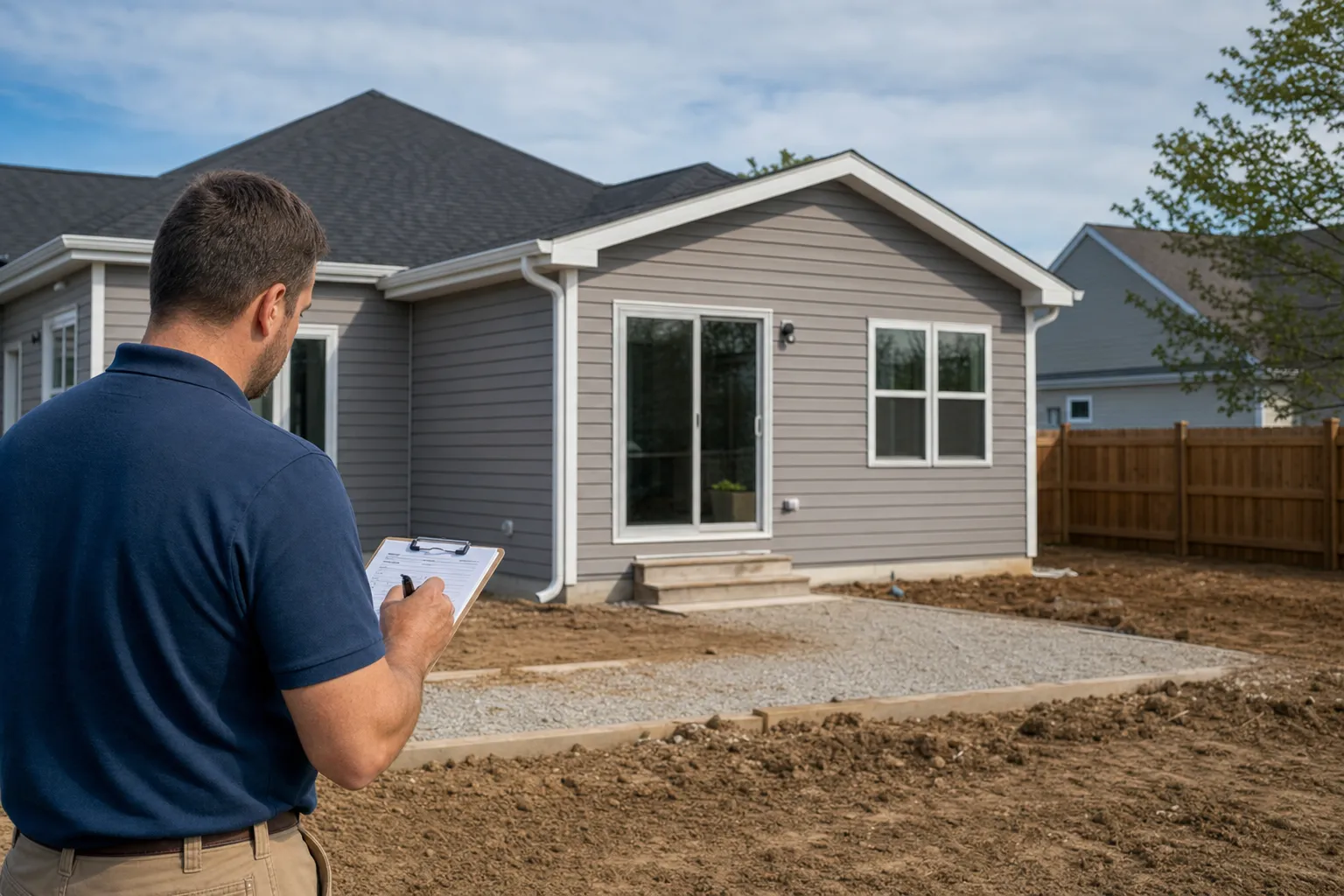
Yes. In most cases a room addition raises your property taxes, because it adds value the county can assess. The Hendricks County Assessor values your home as of Indiana's yearly assessment date and adds permitted, inspected square footage to your assessed value once the new space is recorded. Your bill is figured from that assessed value, minus any deductions you qualify for, times your local tax rate. Indiana's constitutional cap limits a homestead's bill to 1% of its gross assessed value. Because Indiana property taxes are paid in arrears, the increase shows up on a later bill rather than right away. Call the assessor's office before you finalize plans so you know the likely change.
Property taxes are one line item in a larger decision. When you're weighing the full cost of a Brownsburg room addition, the yearly tax change belongs next to design, permits, and build cost, because it keeps coming due every year after the crew is gone. We're Terry Brodnik Group - Contracting and Home Services, a remodeler serving Brownsburg, Indiana, and we'd rather you see that number coming during planning than find it on a bill later.
How does a room addition raise your assessed value in Hendricks County?
A room addition raises your assessed value because the Hendricks County Assessor counts the new finished space as part of your home's value once the space is recorded. Assessed value is the dollar figure the county assigns to your property for tax purposes. More livable space usually means a higher figure.
The usual path looks like this:
- You or your contractor pull a building permit before work starts.
- The work is inspected at required stages and signed off when complete.
- The assessor's office may learn of the new work through permit records or its own reviews.
- The assessor adds the new space to your property record, and your assessed value changes.
Which office issues the permit depends on where you live. Homes inside town limits go through the Town of Brownsburg. Unincorporated areas nearby go through Hendricks County. Confirm which office covers your address before you apply, since a Brownsburg mailing address doesn't always mean the home sits inside town limits.
Indiana assessors value homes at "market value-in-use," which means the value of the property for its current use, judged against similar homes. Assessors look at size, quality of construction, and features. They don't simply add up your construction receipts, so what you paid to build the addition and how much your assessed value rises are often different numbers. A costly custom finish may not raise assessed value dollar for dollar, and a simple, well-sized room may move the value more than you expect.
When will the higher property tax bill show up?
The higher property tax bill usually shows up a year or more after your addition is finished, because Indiana bills property taxes in arrears. "In arrears" means you pay this year for the value assessed in an earlier year.
Indiana assesses property as of a set date each year. The tax bill based on that assessment is paid the following year. So an addition finished this year may not affect what you pay until the next billing cycle, or the one after, depending on when the work wraps up relative to the assessment date. Indiana tax bills are commonly split into two installments during the year, so the higher amount from your addition may appear across both payments rather than all at once.
Timing gets more complicated if construction is still underway on the assessment date. A partly built addition may be valued for its condition at that time, then updated again on a later assessment once the space is complete. That can mean two smaller steps up instead of one.
If your taxes are paid through a mortgage escrow account, expect that account to adjust. The assessment notice shows the updated value before the bill arrives, so watch your mail for it.
How is the new property tax amount figured in Brownsburg?
Your new property tax amount is your updated assessed value, minus any deductions you qualify for, multiplied by the tax rate for your taxing district. Each piece of that formula can move the final number.
A taxing district is the mix of local government units that serve your address. That mix can include the town, the township, the school corporation, the county, and the library. Each unit levies taxes, and the combined rate differs from district to district. Two Brownsburg-area homes with the same assessed value can owe different amounts if they sit in different taxing districts.
Your project doesn't change the rate. It raises the base the rate is applied to, which is why added square footage matters.
For the definitions and formulas the state uses, read Indiana's official property tax guidance from the DLGF, the Indiana Department of Local Government Finance.
We're not going to give you a sample dollar figure, because any example rate would be wrong for many Brownsburg-area homes. Your own current tax bill lists your taxing district and the rate applied to your property, so you can see how a higher assessed value would flow through your actual numbers.
Do Indiana's property tax caps limit the increase?
Yes, Indiana's constitutional tax caps limit a homestead's tax bill to 1% of its gross assessed value, so the cap rises as your value rises but still sets a ceiling. A homestead is the primary residence you own and live in.
Rental homes and other property types have higher cap percentages. If you're a landlord adding space to a rental, the higher cap allows a larger tax bill relative to value than a homestead would face.
Many bills fall below the cap depending on local rates and deductions, so check your current bill to see whether your property already sits at the cap or well under it.
Does the homestead deduction still apply after you build?
Yes, an addition to your primary home does not remove your homestead deduction, but the deduction does not grow to cover all of the new value. Some of the added assessed value will still be taxable.
Indiana lawmakers recently changed how some homestead deductions and credits work. Because those rules have shifted, check the current version with the Hendricks County Assessor or the DLGF rather than relying on older guides or a neighbor's experience. While you have the assessor on the phone, ask whether any other deductions might apply to you. Eligibility depends on factors like age, disability, veteran status, and income limits.
Does the type of room addition change how much your taxes go up?
Yes, finished, heated living space usually adds more assessed value than unfinished or seasonal space, so the type of addition matters. Assessors weigh square footage first, since more space generally means more value. Finish quality matters too, because higher-grade materials and construction can raise the value per square foot. Bathrooms add value beyond the floor area because of the plumbing fixtures, and heated, insulated space counts differently than a room you only use in mild weather.
The table below compares common project types. The table is a general planning guide based on those factors, not a prediction for your home.
| Addition type | What the space usually includes | Likely effect on assessed value |
|---|---|---|
| Primary suite with bathroom | Heated living space plus plumbing fixtures | Higher |
| Bedroom or family room addition | Heated, finished living space | Higher |
| Attached garage | Enclosed space, usually unfinished and unheated | Moderate |
| Sunroom or three-season room | Enclosed space, often not heated year round | Moderate to lower |
| Deck or open porch | Outdoor, unenclosed structure | Lower |
A suite with a bathroom often moves value the most because it adds both living area and fixtures. A three-season room may be valued closer to a porch or closer to living space depending on how the room is built, insulated, and heated. Either way, the final number comes from the assessor.
Can you avoid the tax increase by skipping permits?
No, skipping permits does not reliably avoid higher taxes, and unpermitted work creates bigger problems than the tax bill it tries to dodge. Permits are only one way an assessor learns about changes to a property.
Assessors can still find and value improvements through periodic reviews, aerial images, sales records, and field visits. An addition that never went through permitting can still end up on your property record, just without the inspection history that shows the work was done to code.
The bigger risks start with safety: framing, wiring, plumbing, and heating that were never inspected may not meet code. Selling gets harder, because buyers, lenders, and inspectors may flag space that doesn't match permit records. An insurer may question coverage for damage tied to work that was never permitted. And you may be told to open walls or rebuild finished work so it can be inspected.
The tax change from a permitted addition is a known cost you can plan for. The cost of fixing unpermitted work later is much harder to predict.
How to estimate your property tax change before you finalize plans
The best way to estimate your property tax change is to call the Hendricks County Assessor's office with your planned size and layout before you commit to a final design. A short conversation early in planning is easier to act on than a surprise after construction.
Have these items ready before you call:
- Your parcel number or property address
- Your current tax bill
- The planned square footage of the addition
- The number of new bedrooms and bathrooms
- The finish level you expect (basic, mid-range, or high-end)
Ask how additions like yours are usually valued in this area, when the new space would likely be assessed based on your construction timeline, and whether your current deductions will stay in place after the addition is finished.
Once you have an answer, use it to compare scope options. For example, you might compare a smaller footprint against a larger one, or a plan with one new bathroom against a plan with none. Weigh the yearly tax change against the space and function each option gives your household. Sometimes a modest change in scope keeps most of the benefit while trimming the long-term cost.
The assessor may only give a general idea of how similar projects are valued, not a binding number, so treat the answer as a planning estimate and leave some room in your budget.
What if you think your new assessment is too high?
If your new assessed value looks too high, you can appeal the value through the Hendricks County Assessor's office within the deadline listed on your assessment notice. Missing that deadline can mean waiting another year to raise the issue.
Start with an informal talk with the assessor. Many disputes come from simple errors, such as wrong square footage, an incorrect bathroom count, or a finished room recorded as larger than built. Those errors can often be corrected without a formal hearing. If an informal review doesn't settle the dispute, Indiana's formal appeal process starts at the county level, where a county review board can hear the appeal. Further appeals are possible at the state level.
Bring your final permit and inspection records, accurate floor plans with measured dimensions, and photos of the finished space that show the finish level and fixtures.
Appeal deadlines are strict and set by state rules. Your notice gives the date and the filing steps that apply to your property.
What to know before you commit to a room addition
A permitted room addition will usually raise your assessed value, and your Brownsburg property tax bill will follow, often a year or more later because Indiana taxes are paid in arrears. How much it changes depends on the type of space you add, your taxing district's rate, the deductions you keep, and Indiana's tax caps.
Bring the assessor's estimate into your planning conversation with us, so the yearly tax change sits next to design and build cost when you compare options on our Room Additions in Brownsburg page.