
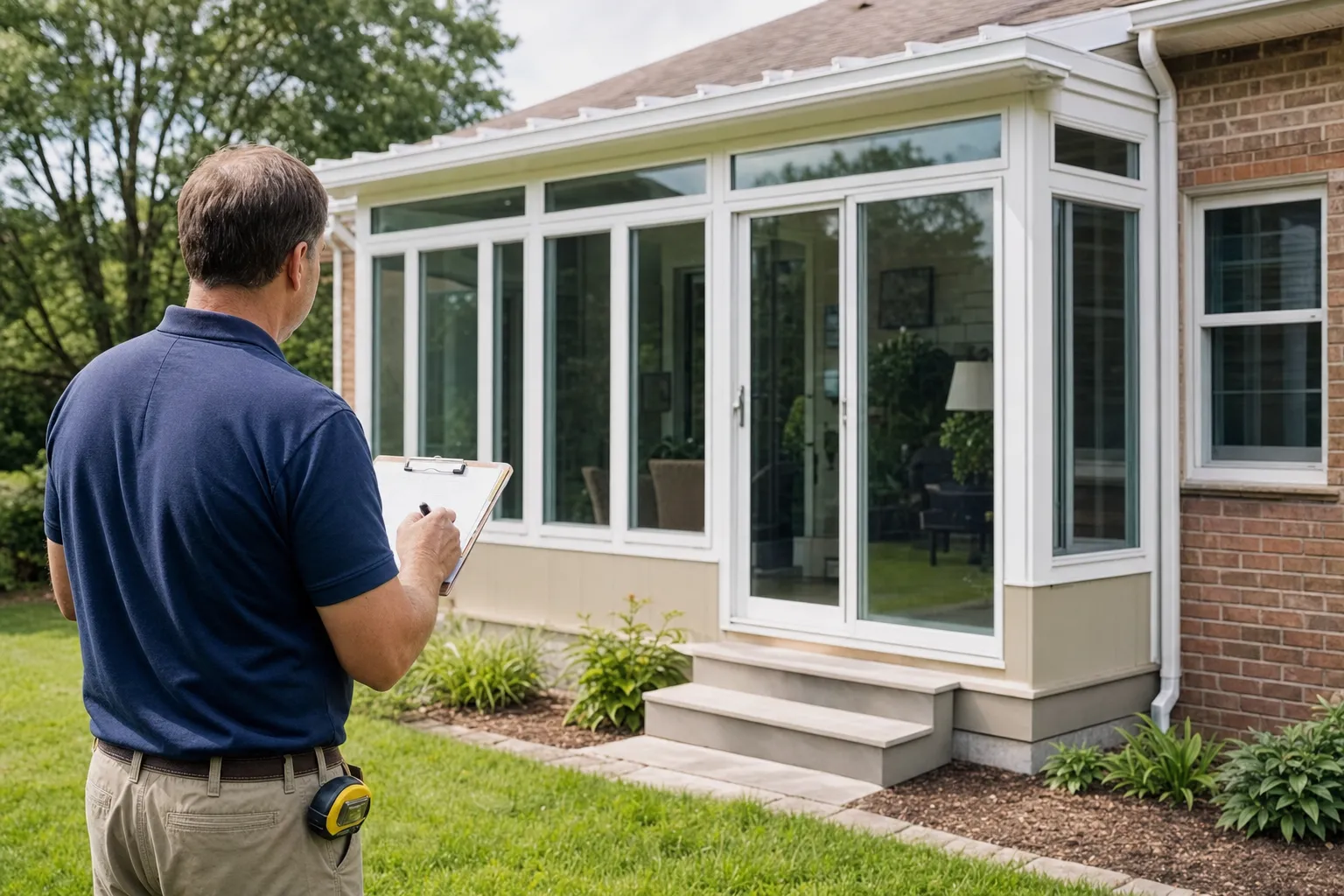
Yes. A sunroom adds square footage and building value to your house, and that raises the cost to rebuild your home after a loss. Tell your insurer before construction starts so you don't end up with a coverage gap while the work is underway. When the room is finished, update your dwelling limit so the policy reflects the larger, more valuable home. Leave the sunroom off your policy and you can end up underinsured after a fire or storm, which means a claim may not pay enough to fully repair the damage. Whether you build a three-season or four-season room can also change how your insurer views the addition, so be specific when you describe the project to your agent.
How does a sunroom addition change your homeowner's insurance?
A sunroom adds square footage and building value, so it raises the cost to rebuild your home, and your dwelling coverage limit needs to rise to match. Settle this early when you plan sunroom additions that add finished space to Brownsburg homes, because the project changes both the size of the house and what it would take to replace it.
Dwelling coverage is the part of your policy that pays to repair or rebuild the house itself. Most policies base it on replacement cost, meaning the cost to rebuild with similar materials today. That isn't the same as your home's market price or what you paid for the house.
An attached sunroom usually counts as part of the dwelling. A detached shed or garage, by contrast, often falls under "other structures" coverage, which is a separate and usually smaller limit. Policy wording varies, so confirm how your own policy classifies an attached room.
Materials matter too. Glass walls, roof panels, framing, HVAC tie-ins (connections to your home's heating and cooling system), and electrical work all add to the rebuild cost an insurer would have to cover. When your agent reviews the addition, the insurer will typically look at three things: how much living space the room adds, what goes into it (glass, roof system, framing, and finishes), and how closely it ties into the main house, such as whether it shares a wall, roofline, foundation, and mechanical systems with the home.
Will my insurance premium go up after adding a sunroom?
Your premium often goes up after a sunroom addition, because a higher dwelling limit usually means a higher premium, but the exact change depends on your insurer and your policy. Only your agent can quote what the new premium will be.
Some sunroom features may affect pricing in either direction. An insurer may view a glass roof differently than a solid insulated roof, and a room with its own heating, or one tied into your home's HVAC system, may be treated differently than an unheated room. Construction type can matter as well. Ask your agent directly how the insurer treats glass roofs, heating, and the framing method you plan to use.
Skipping the call to save on premium can cost far more later. If the house is damaged, the claim may be paid against a limit set for a smaller home.
When should you tell your insurance company about a sunroom?
Call your insurer before construction begins, then call again when the sunroom is finished so the policy matches the completed home. Two calls cover two different risks.
During construction, the house is in a different state than usual. Walls may be open, new materials may be stored on site, and workers are coming and going. An insurer may view that period as a change in risk. If the policy doesn't account for those conditions, you have a coverage gap, and a loss during the build can end up partly or fully uncovered.
Follow these two steps:
- Before the first shovel: Share the project scope, the contract value, the planned square footage, and the start date with your agent. Ask whether anything about your coverage changes while work is happening, and whether the insurer needs any documents from you or your contractor.
- After the final inspection: Send the final project details, photos of the finished room, and any final inspection paperwork. Ask the agent to update your dwelling limit so the policy reflects the finished sunroom.
Keep notes from both calls, including the date and the name of the person you spoke with. Written confirmation from the insurer is even better.
Does a three-season or four-season sunroom matter to your insurer?
The sunroom type can matter, because a four-season sunroom is usually heated, insulated, and built like regular living space, while a three-season room is typically lighter and not meant for winter use.
A three-season sunroom is an enclosed room for spring, summer, and fall that usually has no permanent heating and less insulation. A four-season sunroom is an insulated, climate-controlled room you can use comfortably all year, much like any other room in the house. Insulated walls, thermal glass, a finished ceiling, and an HVAC connection all add to what it would cost to replace the space, so a fully finished room generally adds more rebuild cost than a simpler enclosed porch-style room.
| Feature | Three-season sunroom | Four-season sunroom |
|---|---|---|
| Heating | Usually none, or portable only | Heated, often tied into home HVAC |
| Insulation | Limited | Insulated walls, roof, and glass |
| Year-round use | Not designed for winter | Built for use in every season |
| Likely effect on rebuild cost | Smaller increase | Larger increase |
When you call your agent, don't just say "sunroom." Tell the agent exactly which type you're building, along with the roof and glass type, so the insurer can set an accurate dwelling limit from the start.
What happens if you don't update your policy after adding a sunroom?
If you don't update your policy, you can end up underinsured, which means a large claim may not pay enough to fully repair or rebuild your home, including the new sunroom.
Here is a hypothetical example. A homeowner sets a dwelling limit years before adding a sunroom. After the room is built, nobody updates the policy. Later, a fire or severe storm badly damages the house. The insurer works from the old dwelling limit, which was set for a smaller home. The money available may fall short of the cost to rebuild the larger house, and the homeowner has to cover the difference.
The shortfall can also reach beyond the sunroom itself. Many homeowner's policies include replacement cost conditions, sometimes called coinsurance or insurance-to-value clauses. If your coverage is set too far below the true rebuild cost, these conditions can reduce a payout, even on a partial claim. Every policy words them differently, so read your own policy language or ask your agent to explain it.
An insurer may also ask about the addition during a claim. If the sunroom was never disclosed, the insurer may need to review the work, which can complicate the claim at a stressful moment.
Who covers damage while the sunroom is being built?
Damage during construction can involve both your homeowner's policy and your contractor's insurance, so you should know which one applies before work starts.
Contractors typically carry general liability insurance, which can cover damage the contractor causes to your property or injuries to other people. Where applicable, they also carry workers' compensation, which covers injuries to workers on the job. Ask your contractor for a certificate of insurance, a one-page document from the contractor's insurer that shows what coverage is active and when it expires.
Some projects also use builder's risk coverage. Builder's risk is a policy that protects work in progress, such as new framing, glass, and materials stored on site, against risks like fire, theft, or storm damage before the project is finished. Not every sunroom project uses it, so ask both your agent and your contractor whether builder's risk is needed for your project and who would carry the policy.
Before work begins, confirm these items:
- A current certificate of insurance from the contractor showing liability coverage
- Whether the contractor carries workers' compensation and who it covers
- Whether your policy, the contractor's policy, or a builder's risk policy covers materials stored on site
Keep a copy of the signed contract and the contractor's certificate of insurance with your home records.
Why permits and inspections matter for sunroom insurance in Brownsburg
A permitted, inspected sunroom gives your insurer clear proof the addition was built to local code, which can make updating coverage and filing future claims smoother.
Permits for home additions in Brownsburg are handled by the local building authority. Requirements can change, so confirm what your project needs with the Town of Brownsburg. If your home sits outside town limits, check with Hendricks County instead.
Unpermitted work creates questions. An insurer may ask about an addition that was never inspected, because nobody outside the project has confirmed the framing, electrical work, or roof structure meets code. Those questions can come up when you update the policy, during a claim, or when you sell the house.
Weather in central Indiana adds another reason to share details. The region sees hail, strong winds, and winter snow. A sunroom has more glass and a different roof system than the rest of the house, so tell your agent about:
- The roof panel type (glass, polycarbonate, or a solid insulated roof)
- The type of glass in the walls and roof
- How the room is designed to handle snow load, meaning the weight of snow sitting on the roof
Once the project passes its final inspection, keep the inspection records. They're some of the most useful paperwork to send your insurer when you ask to update your dwelling limit.
What should you ask your insurance agent before adding a sunroom?
Ask how the sunroom will change your dwelling limit, your premium, and your coverage during construction, and get the answers in writing. A short list of questions keeps the call focused:
- How much should my dwelling limit rise after the sunroom is finished?
- Does a three-season or four-season room change my rate?
- Am I covered while construction work is happening?
- Do I need builder's risk coverage for this project?
- What paperwork do you need from me when the room is done?
- Does my policy cover glass breakage and storm damage to the sunroom?
Pin down the answer on glass. Some policies treat glass breakage or certain storm damage differently, and a sunroom has far more glass than a typical room. Ask the agent to point to the policy section that applies.
If you want neutral help understanding policy terms, review the homeowners insurance guidance from the Indiana Department of Insurance. The state agency offers consumer resources that explain how homeowner's policies work and how to raise concerns with an insurer.
While you have the agent on the phone, ask about contents coverage too. Contents coverage, sometimes called personal property coverage, pays for belongings rather than the structure itself. If you plan to furnish the sunroom with new furniture, rugs, or electronics, those items add to the value of what you own, and the agent can tell you whether your current contents limit still fits.
Key takeaways before you build your Brownsburg sunroom
A sunroom raises your home's rebuild cost, so your dwelling coverage should go up to match. Call your insurer before work starts and again when the room is finished, and keep permits, inspection records, and contractor insurance papers on file.
If you're still planning, pin down the specifics your insurer will ask for early: square footage, materials, and whether it's a three-season or four-season room. Our Sunroom Additions in Brownsburg, IN page explains how these projects come together. Once you have those details, call your insurance agent before any construction begins.