
Brownsburg, IN
Does a Sunroom Need a Foundation in Brownsburg?
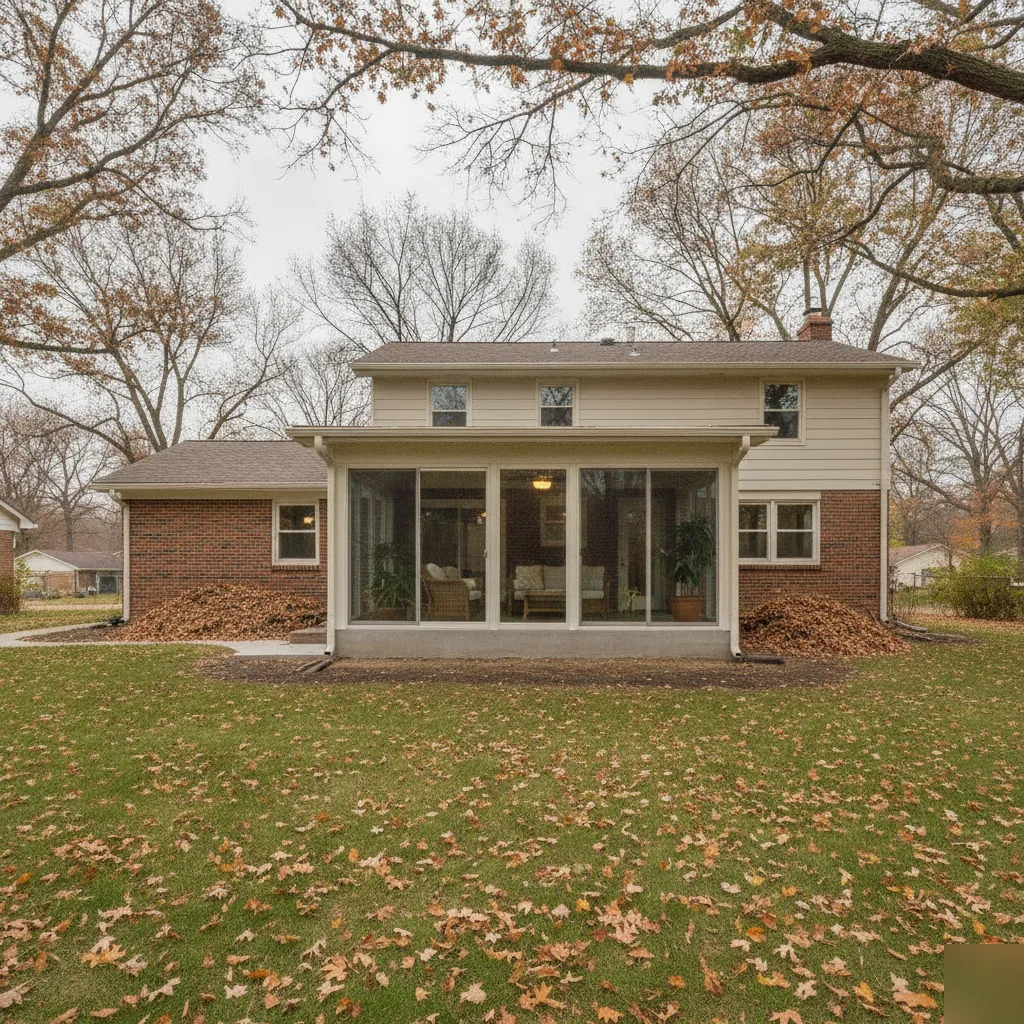
Most Sunroom Additions Do Require a Foundation
Here's the quick answer for homeowners in Brownsburg. Most sunroom additions absolutely need a foundation. The exact type depends on your home's existing setup, the sunroom's design, and local building codes right here in Hendricks County. But some solid foundation support is almost always part of the job.
Many homeowners picture a sunroom as a lighter project. Maybe something more like a screened porch. Or a simple patio enclosure. That's a fair thought. But it just doesn't line up with how these projects actually go. A real sunroom addition carries significant weight. Glass panels, framing lumber, roof materials, sometimes even HVAC connections, it all adds up fast. That heavy load needs solid ground underneath it.
Why the Foundation Matters So Much
Without proper support, a sunroom will settle unevenly over time. The team sees this often on older additions around Brownsburg. Corners end up dropping an inch or more (and homeowners always call us about it). Doors start sticking. Windows crack along their frames. Water pools in spots it never should. All because the first foundation simply couldn't handle the weight.
Indiana's freeze-thaw cycle only makes this worse. The ground around your place expands when it freezes. It shrinks when it thaws. A thin, small foundation rides that cycle up and down. A well-built one, though, sits deep below the frost line and stays put.
What Brownsburg Code Requires
Hendricks County uses the Indiana Residential Code. That code aligns much like the International Residential Code. For any new room addition, footings must extend below our local frost line. Here in central Indiana, that means 30 to 36 inches deep. The team has pulled permits right here in Brownsburg; inspectors always check footing depth before any framing starts. They don't mess around with this part.
So even if your sunroom feels like a simple project, the permit process treats it just like any other room. And that means foundation requirements apply.
The team here sees a few common foundation types used for sunroom additions in our area:
- Concrete slab on grade, a poured slab with footings around its edge. It's typical for ground-level sunrooms on flat yards.
- Pier and beam, concrete piers sunk below the frost line, with beams connecting them. We often use this when a yard slopes or to match a home's crawl space.
- Continuous footer with stem wall, a classic method that builds a small crawl space under the sunroom. Very handy for ductwork or plumbing lines later.
Each choice works well, if it's the right fit. It depends on your lot's slope. It depends on your home's current foundation. And it depends on if you'll heat or cool the sunroom all year.
The Exception That Proves the Rule
Three-season rooms or certain patio enclosures sometimes go on an old concrete patio slab. But even then, the team always checks if that slab can take the extra weight. Most backyard patios are just four inches thick. No footings under them. Good for patio furniture. Not good for a whole room with a roof and walls.
One project, just off Arbuckle Acres, really sticks in the mind. The homeowner had a thick, solid-looking patio. But when the team checked, no rebar was inside. It sat on loose fill dirt. Building on that would have been a real mistake. It would have shown up fast, within two winters.
The foundation is the invisible part of a sunroom addition. Nobody sees it once the job's done. But it decides if everything above it holds up. Doing it right at the start saves you from costly, messy problems down the road. This is the part most people overthink, or rather, underthink.
Common Foundation Types Used for Sunroom Additions
Not every sunroom foundation is the same. The right pick depends on your ground, your home's structure, and how you'll use the space. The team sees three main foundation types on Brownsburg projects. Each has real trade-offs to know about.
Concrete Slab-on-Grade
This is the usual choice. A concrete slab goes right on prepared ground. It's simple. Crews dig out a few inches, put down gravel for drainage, then pour a reinforced slab. Usually four to six inches thick. In Brownsburg's heavy clay soil, good compaction matters more than people think. Miss that, and you'll see cracks within a year or two. By the way, Brownsburg's clay soil is why we have so many drainage issues around town.
Slab foundations work for both three-season and four-season sunrooms. They take radiant floor heating well, if you want comfort all year. But you won't get access to plumbing or utilities underneath. So plan that out early.
Frost-Protected Footings
Indiana's frost line is about 30 to 36 inches deep (that's per the Indiana Residential Code). Footings must go below that. Keeps them from pushing up. Frost-protected footings are a solid concrete wall poured in trenches around the sunroom's edge. The floor inside those walls can be a poured slab or a framed subfloor.
This is what the team uses for four-season sunrooms needing full HVAC and insulation. Most Brownsburg inspectors want to see those footings at the right depth before any framing goes up. The team has seen jobs get red-tagged because footings were off by a few inches.
It takes more time, more work than a basic slab. But it's worth it for a room you'll use all year, heated and cooled.
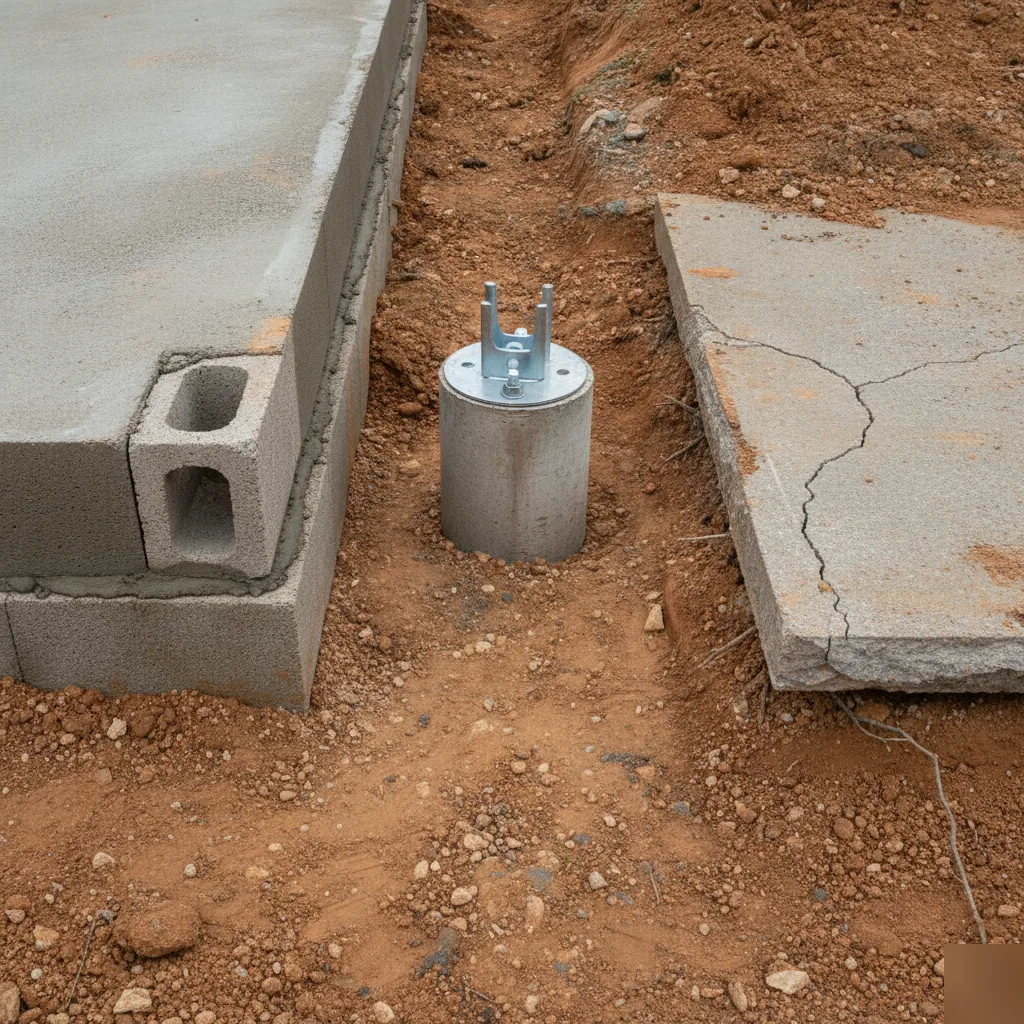
Pier and Beam
Concrete piers are sunk into the ground at regular spots. Beams run across the top. A subfloor goes on that. This works well on sloped lots. Or if you want to keep ground disruption low.
Some neighborhoods around Arbuckle Acres, or in older Brownsburg, have tricky backyard slopes. Pier and beam handles that, no huge digging needed. Plus, you get crawl space access for electrical or plumbing later.
The bad part? Floors can feel bouncy if the piers aren't spaced right. Cold air gets under in winter. You need good insulation and skirting.
How to Pick the Right One
Here's what the team considers on every sunroom addition project:
- Soil conditions, Brownsburg's clay soil swells and shrinks with water. Drainage and compaction are key for any foundation here.
- Intended use, A three-season room needs different support than a fully heated and cooled space.
- Lot grading, Flat yards often get slabs. Sloped yards usually need pier and beam.
- Future plans, Adding plumbing or a wet bar later is much simpler with a crawl space below.
Most folks don't get that the foundation eats up a big part of the project time. Doing it right early saves you from structural headaches later. A sunroom that sinks unevenly will crack drywall. It will jam doors. And it will pull away from your home's outside wall.
The team has seen all three foundation types work well in Brownsburg. That's as long as they meet code and fit the site. Problems come when people pick a type without considering the ground or our climate. That's a shortcut. It always catches up. If you're weighing options, our sunroom addition services walk you through which foundation fits your home and lot.
Why an Existing Concrete Patio Usually Cannot Be Reused as a Foundation
This is the question the team gets asked most often. You have a perfectly fine concrete patio out back. It looks solid enough. Why can't we just build your sunroom right on it?
Short answer: that patio wasn't built to hold a whole room.
The Thickness Problem
Most backyard patios here in Brownsburg are poured around 3.5 to 4 inches thick. That's okay for a grill, patio furniture, walking around. But a sunroom needs a foundation slab, minimum 6 inches thick. Lots of designs need thicker edges, or deeper footings around the outside. Your patio just doesn't have enough concrete to safely hold walls, a roof, and glass.
And it's even worse underground.
What's Underneath Matters More Than What You See
A good sunroom foundation sits on packed gravel and properly prepped ground. The soil underneath gets tested and leveled before any concrete goes down. Patio slabs? Usually poured on whatever dirt was left after the house went up. Sometimes there's thin gravel. Sometimes it's just plain backfill.
Hendricks County soil has plenty of clay. That clay expands when wet, shrinks when dry. If the ground under your patio wasn't packed well, that slab has probably moved over the years. You might not see it with your eye. But a level will tell you fast. The team has pulled up patios that looked fine. But they had sunk by an inch or more across a 12-foot span.
That kind of shifting under a sunroom leads to cracked glass. It leads to sticking doors. And water leaks at the seams.
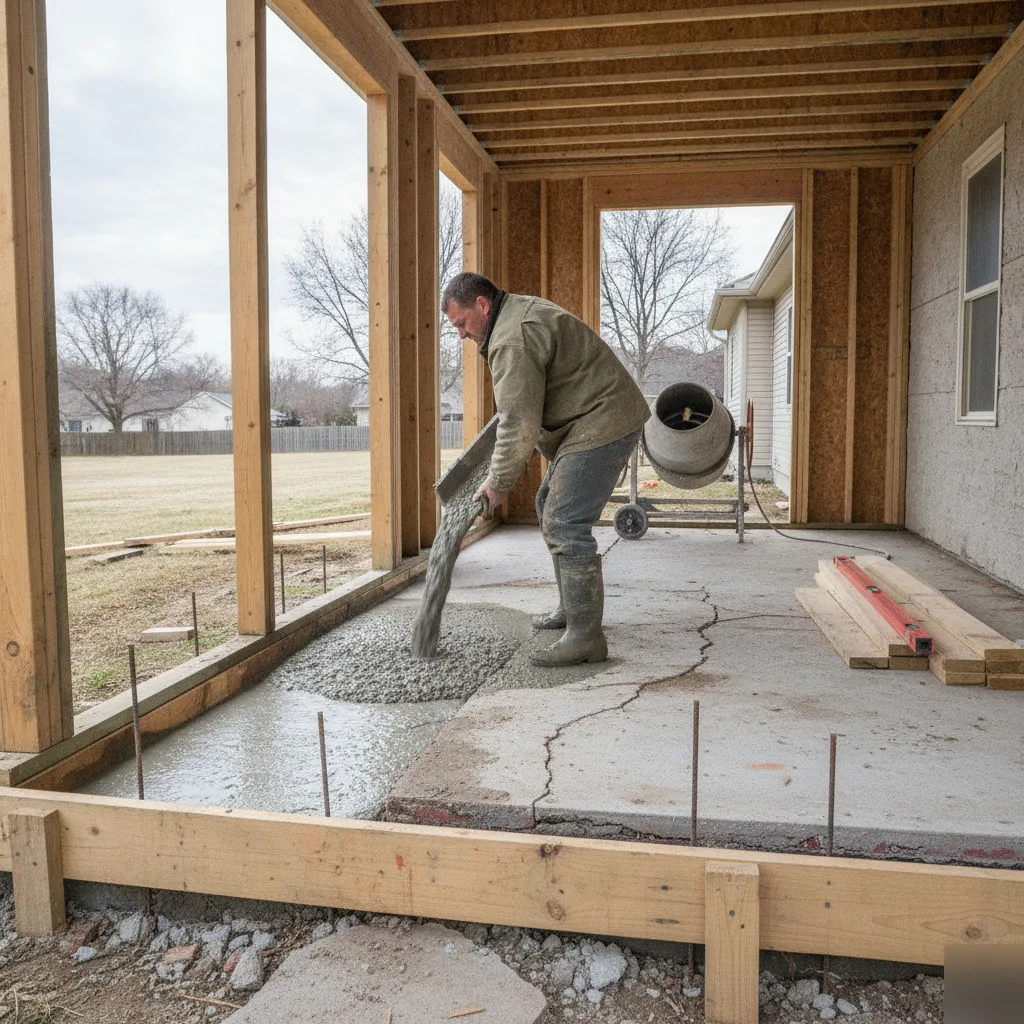
Reinforcement Is Usually Missing
Sunroom foundation slabs need rebar or wire mesh. Placed at certain spots. Most patio pours around Brownsburg use fiber mesh, or nothing. Without good steel inside, the slab can't fight the side forces a room puts on it. Wind on a three-season room alone can push thousands of pounds against the foundation's edge.
Here's a common story the team sees. A homeowner near Arbuckle Acres had a 15-year-old patio. They wanted to make it a sunroom. It looked perfect. But when the team checked it with a rebar scanner, it had no steel at all. The slab also had no footings below the frost line. That's 30 inches here in central Indiana, per the Indiana Residential Code.
That patio had to go. No other choice.
When a Patio Can Stay
Sometimes, rarely, an existing slab works. If your patio was thick enough, had real rebar, sat on packed base material, and had footings at the right depth, it might work as your sunroom foundation. But that's a lot of things to line up. Most patios don't hit even two of those points.
The only way to know is a good inspection. The team can core-drill a small bit to check thickness and rebar. Then we check the ground underneath. That takes less than an afternoon. You get a clear answer.
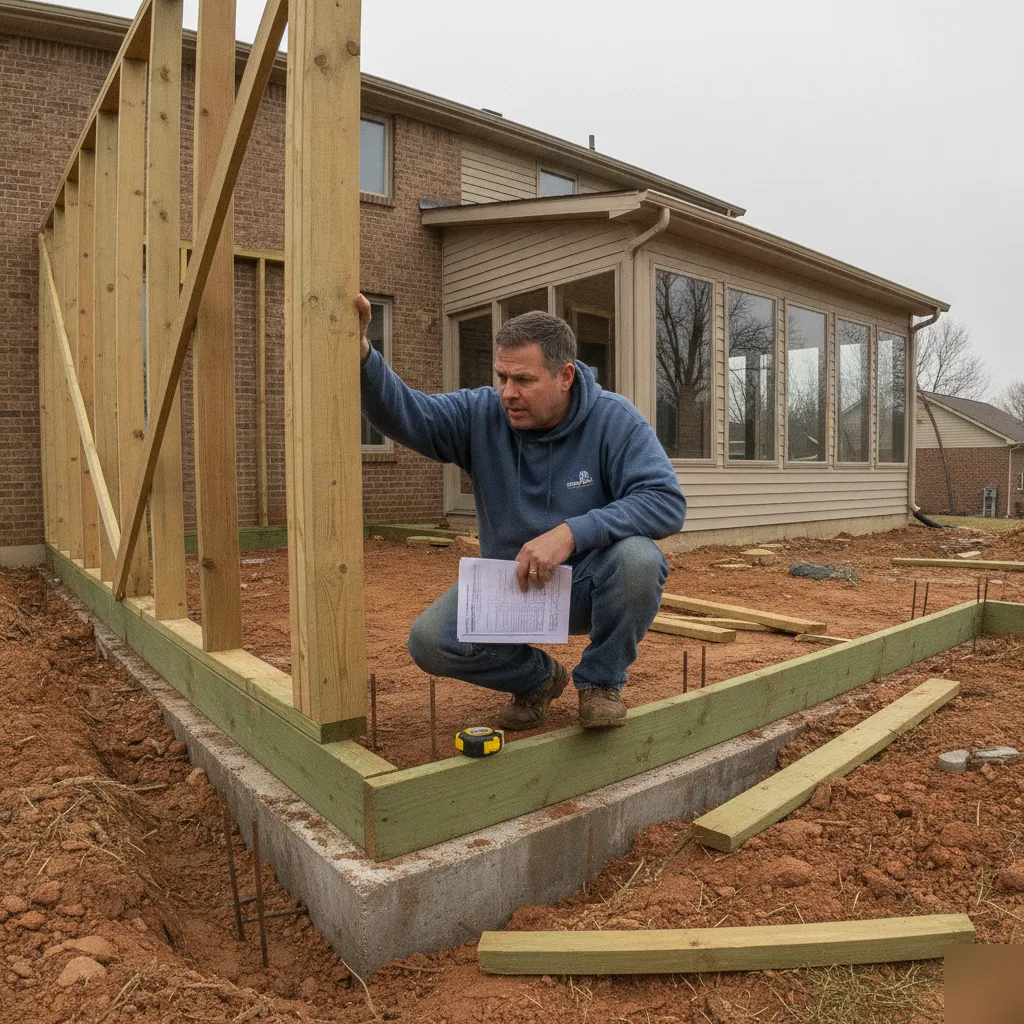
Trying to save money on a bad slab is the quickest way to turn a sunroom into a pricey problem. Cracked framing, seals that fail, doors that won't shut. Every one of those comes back to the foundation. If you're thinking about a sunroom addition in Brownsburg, talk to the team. Let's look at your foundation options before you decide on anything.
Get the base right and everything above it lasts.
Frequently Asked Questions
Does every sunroom addition in Brownsburg need a permit and foundation inspection?
Yes, every sunroom addition in Brownsburg requires a permit, and inspectors will check your foundation before framing begins. Hendricks County follows the Indiana Residential Code, which treats a sunroom just like any other room addition. That means footings must reach 30 to 36 inches deep — below the local frost line. Inspectors here don't skip that step. If your footings are even a few inches short, the job gets red-tagged. Getting the permit right from the start protects you and your home.
Can I build a sunroom on my existing backyard patio slab in Brownsburg?
Sometimes, but most backyard patio slabs in Brownsburg aren't built to handle a full sunroom. Most are only four inches thick with no rebar and no footings underneath. That's fine for patio furniture — not fine for glass panels, framing, and a roof. Before you assume your slab will work, have someone check its thickness, rebar, and what's underneath it. Loose fill dirt under a slab is a common problem here, especially in older Brownsburg yards. Building on the wrong base shows up fast, usually within a couple of winters.
How does Brownsburg's clay soil affect sunroom foundation choices?
Brownsburg's heavy clay soil expands when wet and shrinks when dry, which puts real stress on foundations. That's actually why so many yards around town have drainage issues. For a sunroom slab, good soil compaction before the pour matters more than most people realize. Skip that step and you'll see cracks within a year or two. Indiana's freeze-thaw cycle makes it worse — the ground shifts every winter. A properly compacted base and footings below the frost line keep your sunroom from settling unevenly over time.
What's the difference between a three-season room and a four-season sunroom when it comes to the foundation?
A four-season sunroom needs a stronger, deeper foundation than a three-season room. Four-season rooms are heated and cooled year-round, so they need full frost-protected footings at 30 to 36 inches deep, plus better insulation underneath. Three-season rooms sometimes work on a simpler slab, but the slab still needs proper footings around its edge. If you plan to use your sunroom in January, don't cut corners on the foundation. The foundation type you choose now decides how comfortable and stable that room stays for decades. Our sunroom addition page covers how these decisions connect to the full project.
Is pier and beam a good foundation option for sloped yards in Brownsburg?
Yes, pier and beam works well for sloped lots in Brownsburg, including tricky backyards around neighborhoods like Arbuckle Acres. Instead of major digging and grading, concrete piers go into the ground at set points and beams span across the top. You get a level subfloor without moving a lot of dirt. You also get crawl space access for electrical or plumbing later. The trade-off is that floors can feel bouncy if piers aren't spaced correctly, and you'll need good insulation and skirting to keep cold air out in winter.
What's a common mistake homeowners make when planning a sunroom foundation?
The most common mistake is treating a sunroom like a lightweight patio cover and skipping proper footing depth. Many homeowners assume a thin slab is enough because a sunroom looks simple from the outside. But glass panels, framing, roofing, and sometimes HVAC connections add up to serious weight. Without footings below Brownsburg's frost line, that weight causes uneven settling. Doors stick. Window frames crack. Water pools where it shouldn't. The foundation is the part nobody sees once the job is done — but it decides whether everything above it holds up for years.