
Brownsburg, IN
Quartz vs. Granite Countertops for Brownsburg Homes
Quartz and Granite Are Made Very Differently
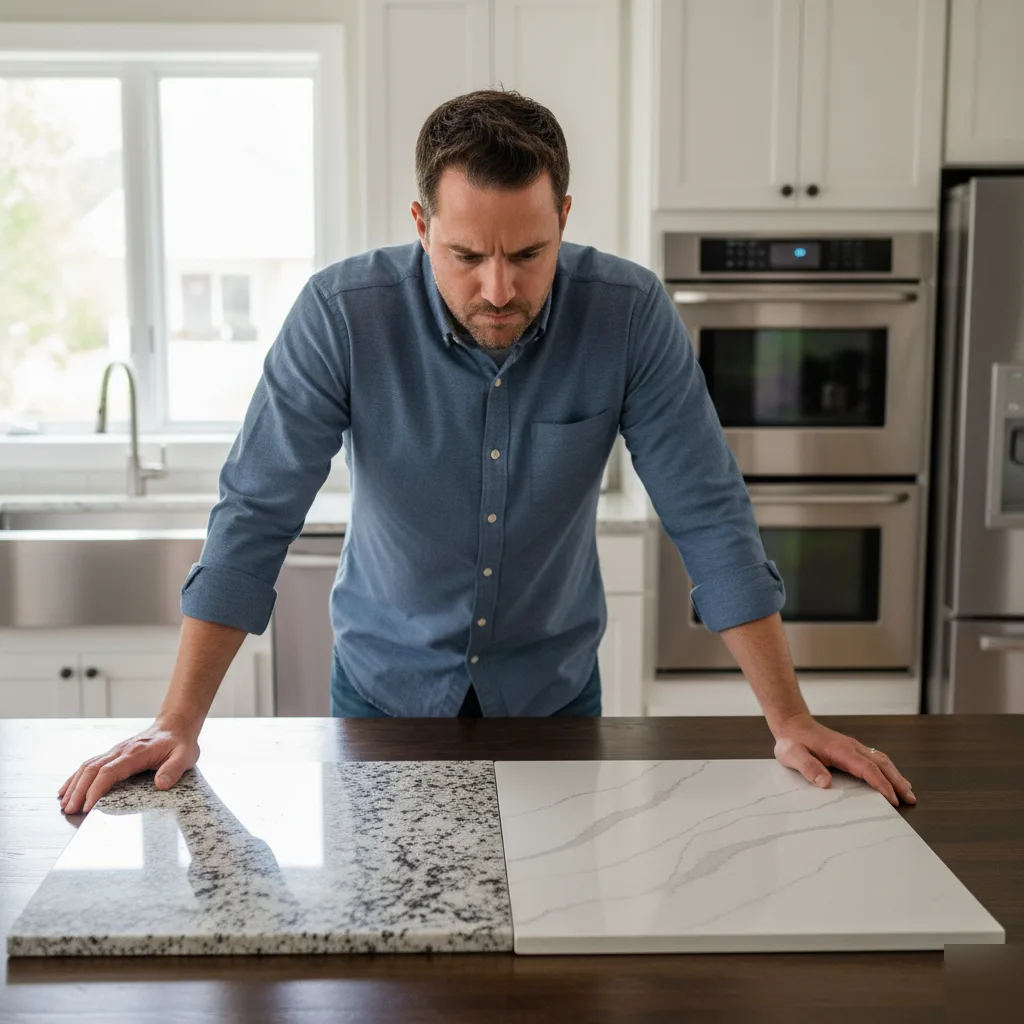
Granite starts deep underground. It forms over millions of years from hot magma that cooled slowly in the earth's crust. Quarries around the world cut these huge pieces of rock into massive slabs. Those slabs get polished. Then they ship to fabricators, who cut them for your kitchen. Every single piece looks different. Nature made it that way, you see. The veins, the speckles, the shifts in color you find in granite are always random. Quartz countertops are not dug out of the earth in slab form. They're engineered inside a factory. Most of a quartz slab, about 90 to 95 percent, is just natural quartz crystal. This crystal gets ground up. Then it's mixed with resins and different pigments. The folks at the Marble Institute of America mention how this controlled manufacturing process allows for really consistent color and pattern. That's a big deal when you need to match countertops across a big kitchen in your Brownsburg home.
What "Natural" Really Means Here
People hear "natural stone." They assume it's always a better choice. That isn't always true, though. Natural means granite has tiny pores in its surface. Those pores can soak up liquids. This happens if the stone isn't sealed right. Our team sees this error all the time in older Hendricks County homes. The granite was put in years ago. Nobody ever resealed it. Quartz countertops leave the factory already non-porous. The resin binder fills in all those small gaps. So spilled coffee, red wine, even raw chicken juice won't seep into the surface. You just wipe it away. It's gone for good.
How the Manufacturing Process Affects Your Slab
Here's where this gets practical for your kitchen project. Granite is cut from real rock. No two slabs are exactly alike. If your kitchen needs two pieces joined at a seam, the pattern might not line up perfectly. We've noticed most people don't realize this. Not until they're standing at the fabricator's warehouse, anyway. They'll be looking at their chosen slabs side by side. Quartz gives you much more control. The factory process makes it so you can order multiple slabs from the same production run. You will get a nearly identical match. For L-shaped kitchens, or those with an island and perimeter counters, that consistency really matters. But granite has something quartz just can't copy. Depth. Real stone shows a visual complexity. It catches light differently from various angles. It's the kind of subtle detail you might notice every morning when the sun streams through your kitchen window. (That early morning light can really make a difference). Here's a quick rundown of how these two materials are made differently:
- Granite is pulled from the earth as a solid natural slab, then cut and polished to size.
- Quartz is engineered stone. It's made from crushed natural quartz bound with polymer resins under high pressure.
- Granite needs periodic sealing. This is because its surface is porous.
- Quartz leaves the factory sealed. It's non-porous, so no extra step is needed on your end.
- Every granite slab is unique, a one-of-a-kind piece. Quartz slabs from the same manufacturing batch look almost identical.
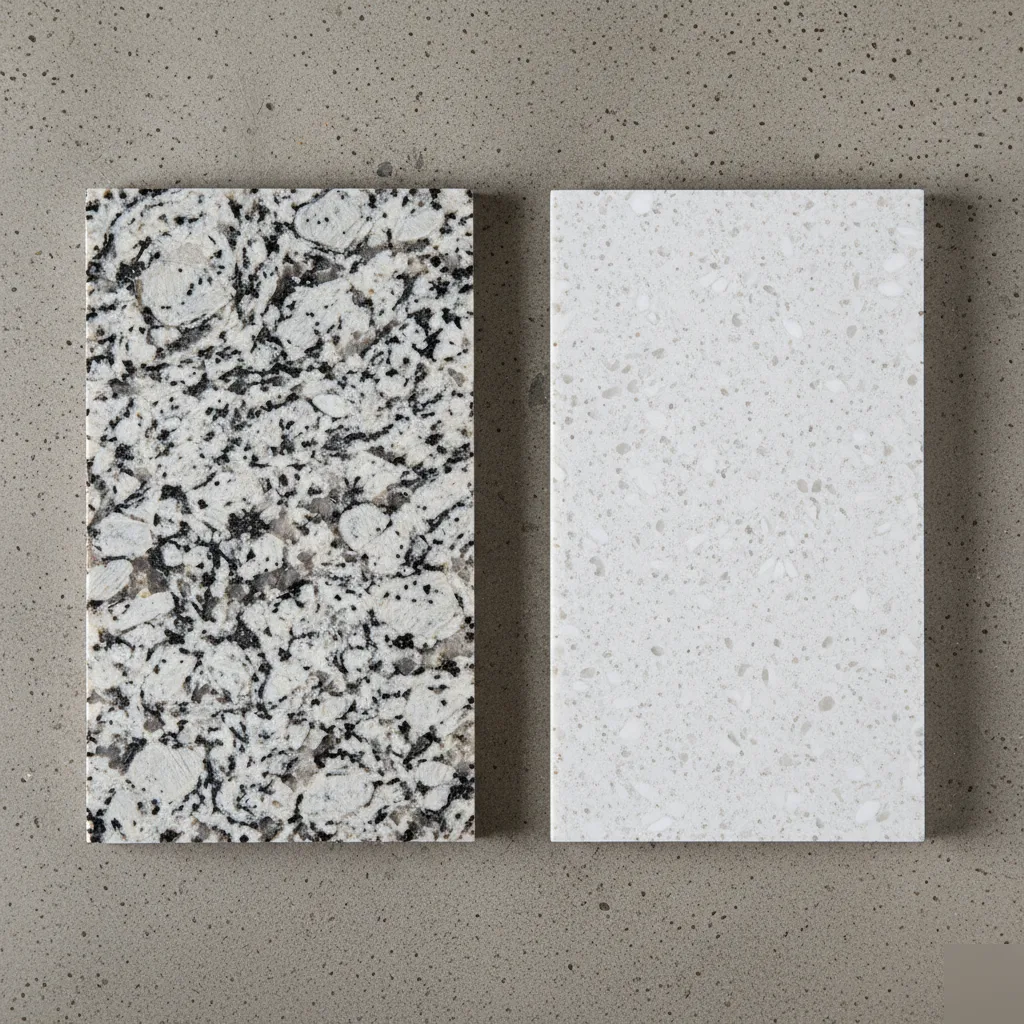
Our team has installed both types of surfaces in homes all over Brownsburg. We've worked on newer builds near Cardinal Estates. We've also helped with renovated ranch-style homes closer to downtown. The right choice for you really depends on what you value most. If you need a surface that looks exactly the same across every counter in your kitchen, quartz handles that beautifully. If you want a stone that feels truly unique, and you're okay with a little maintenance, granite gives you something a factory just can't replicate. Neither material is a shortcut for the installer. Both require skilled fabrication. They also need proper installation. That gets them to perform the way they should for your Brownsburg home. That's the part many homeowners underestimate, the careful work behind the countertop is just as important as the stone itself.
Durability and Heat Resistance Work Differently for Each Material
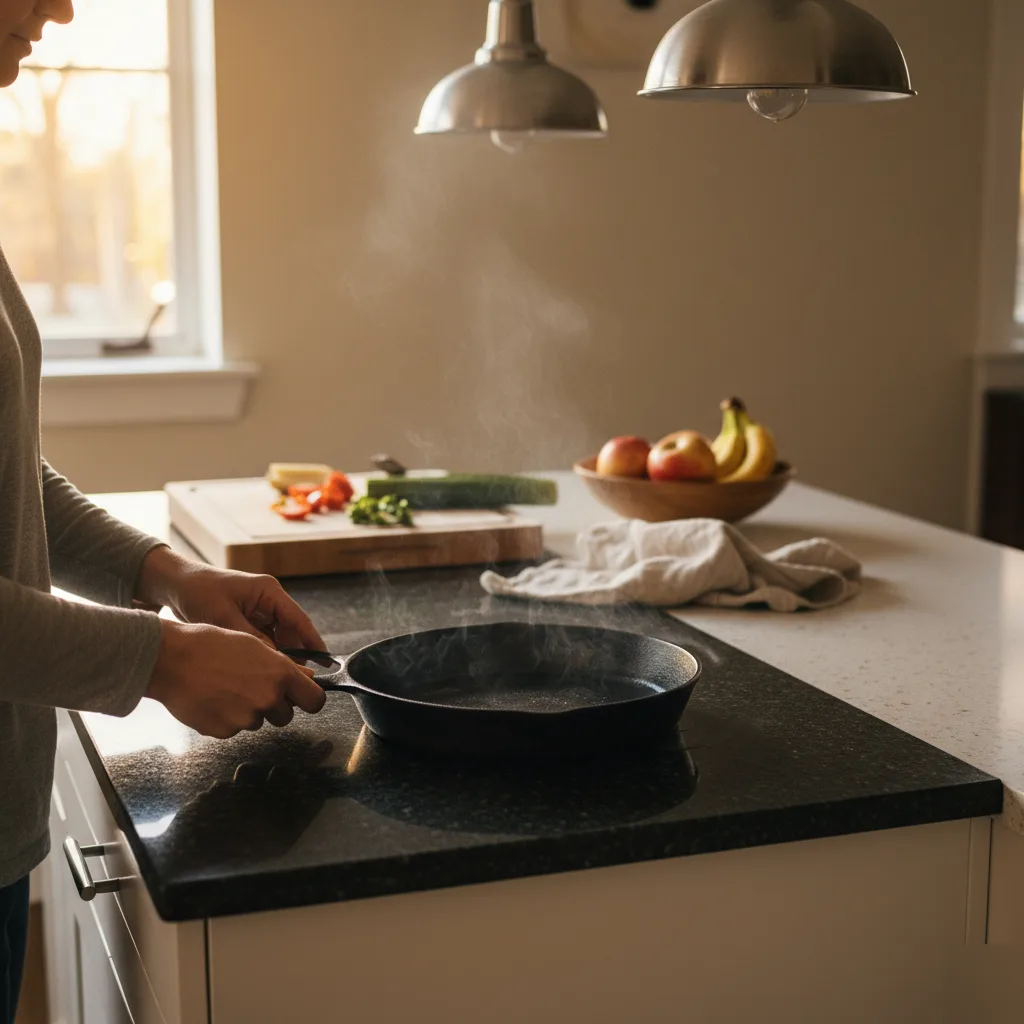
Granite handles high heat like a true champion. You can take a hot pan right off the stove. Set it down on a granite countertop. The stone won't scorch. It won't crack or change color. Granite formed deep underground. It went through extreme heat and pressure already. Your cast iron skillet isn't going to be worse than that. Quartz countertops tell a different story about heat. The resin binders in quartz begin to break down. That happens around 300 degrees Fahrenheit. Put a hot pot directly on a quartz surface, you risk a permanent discolored ring. Our team sees this kind of damage in Brownsburg kitchens more often than people might think. A simple trivet or a hot pad takes care of the issue completely. But you have to remember to use one every single time you put down a hot item.
Scratch and Chip Resistance
Both materials are hard. Granite usually ranks around 6 to 7 on the Mohs hardness scale. That's according to the Geological Society of America. Quartz scores about the same. But hardness doesn't quite tell the whole story here. Granite is a natural stone. It has tiny fissures and mineral variations throughout. A sharp impact on the edge of a granite countertop can cause it to chip. Those chips can be fixed. Sometimes the repair still shows, though. Quartz resists chipping a bit better. The resin holds the material together more uniformly. Here's what matters for everyday cooking and living in your Brownsburg kitchen:
- Granite handles direct heat with ease, but its exposed edges can chip more easily.
- Quartz resists chips and scratches quite well. It does need protection from hot cookware, however.
- Both materials hold up for many decades when cared for properly.
- Neither surface will scratch from normal knife work. Still, cutting boards save both surfaces from unnecessary wear.
So the tradeoff is a real consideration. You're choosing between a surface that isn't bothered by heat. Or one that handles impact a bit better.
How Indiana Weather Plays Into This
Most folks don't stop to think about temperature swings when they pick countertops. But if your Brownsburg home has counters near a window that gets a lot of afternoon sun, the surface will heat up and cool down repeatedly. Quartz handles this just fine indoors. Granite handles it fine no matter where it is. The difference shows up clearly if you're thinking about an outdoor kitchen. Quartz manufacturers generally don't suggest their product for use outside. UV exposure can fade the color over time. The resin can also yellow. Granite works outdoors without those kinds of concerns. For indoor kitchens in Hendricks County homes, both materials perform well. They will stand up to every season. One thing the team notices during kitchen remodels: how homeowners actually use their counters. A family that cooks big meals every night. They might drop heavy pans now and then. That family needs a different conversation than someone who mostly uses the kitchen for coffee and takeout. Your daily habits should really drive this choice more than anything else. And here's a practical tip from years of installs. If you decide on quartz, keep two or three silicone trivets in a drawer. Put them right next to the stove. Make it a habit from the first day you use them. The homeowners who damage their quartz almost always say the same thing. "I only set the pan down for a second." That one second is truly all it takes. Both quartz and granite countertops last a good long time. That's in a well-maintained kitchen. The durability question isn't really about which one is tougher overall. It's about which weaknesses you're willing to live with.
Maintenance and Sealing Requirements Fit Different Lifestyles
Here's where our team often sees the biggest surprise for Brownsburg homeowners. Granite needs sealing. Quartz does not. That one difference changes your daily routine. More than most people expect, frankly. Granite is a natural stone. It has those tiny pores. Those pores will absorb liquids. That happens if the surface isn't sealed correctly. Most granite countertops need resealing about once a year. Sometimes more often. It really depends on the color and the finish. Lighter granites often tend to be more porous. A dark coffee spill on an unsealed light granite slab can leave a shadow. That shadow can be tough to get out.
What Granite Sealing Actually Looks Like
The sealing process itself isn't difficult. You wipe on a stone sealer. Let it sit for a bit. Then you buff it off. It usually takes about 30 minutes for an average kitchen. But you have to remember to do it. And if you skip a year, stains can set in. You might not even notice them right away. Our team has pulled out granite slabs in older Brownsburg homes near Arbuckle Acres. The previous owner had clearly stopped sealing years ago. The damage was just permanent. Here's a simple way to test if your granite needs a reseal:
- Place a few drops of water on the surface of the counter.
- Wait 10 to 15 minutes, give it some time.
- Check if the water has made the stone underneath look darker.
- If the stone appears darker, it's definitely time to reseal.
- If the water beads up and just sits on top, your seal is still doing its job.
Most people don't realize this part. Not until it's too late, that is. A well-sealed granite countertop works great for years. A neglected one soaks up stains like a sponge.
Quartz Countertops Skip That Step Entirely
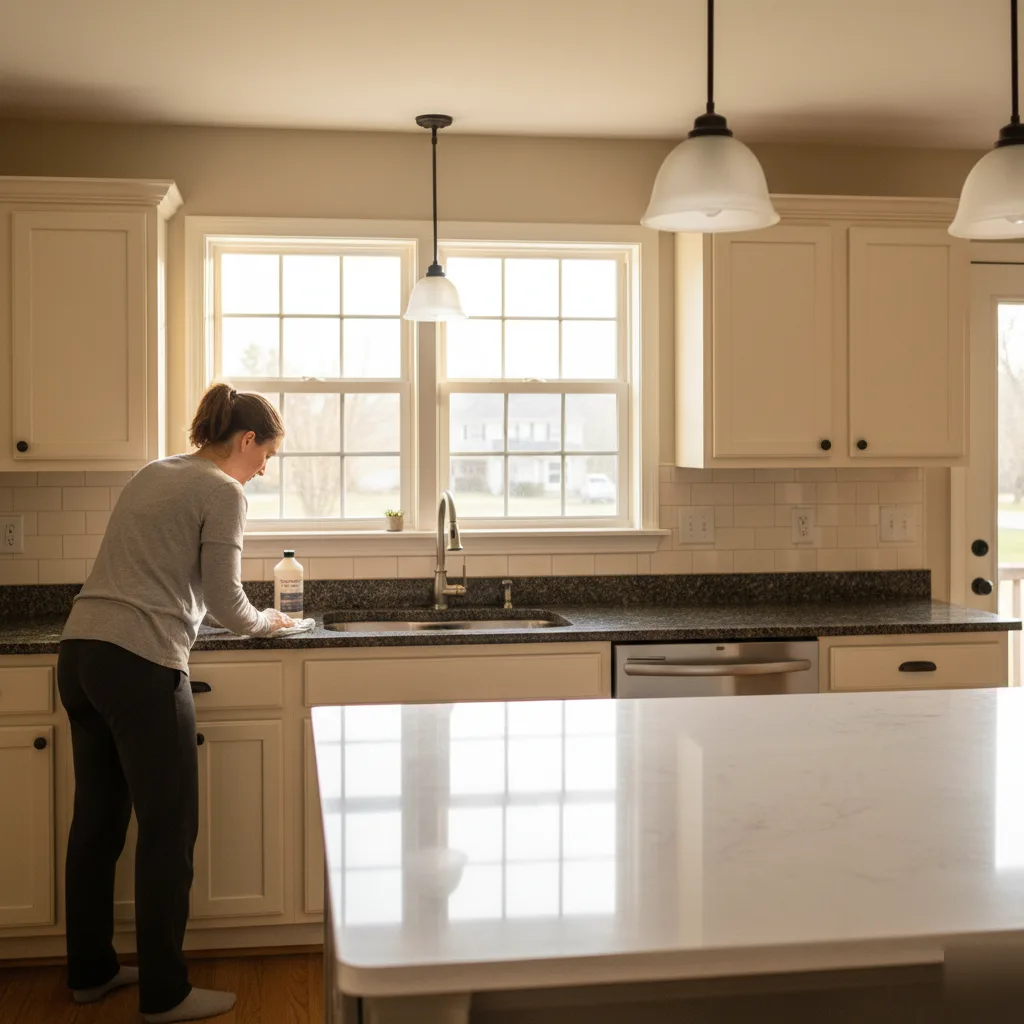
Quartz is engineered with resin binders. These resins fill every single gap in the material. No pores means no sealing. Ever. You simply clean it with soap and water. That's it. Red wine, tomato sauce, grape juice, none of it soaks in. For busy families trying to juggle kids and dinner prep, this convenience really matters a lot. But quartz isn't completely invincible. Harsh chemicals, things like bleach or oven cleaner, can dull the resin over time. And quartz, as we've talked about, doesn't handle high heat the way granite does. Setting a hot pan directly on quartz can cause discoloration. It can even lead to cracking. Our team always recommends trivets for quartz kitchens, no exceptions for any Brownsburg homeowner. So which maintenance style fits your day-to-day life? Really give it some thought:
- Granite rewards homeowners who enjoy caring for natural materials. They don't mind a simple yearly task.
- Quartz works better for people who want a clean-and-forget surface. It needs very little upkeep.
- Both materials need basic care. This means wiping spills quickly. It also means using cutting boards.
- Neither material is truly maintenance-free. One just asks less of you on a regular basis.
Frequently Asked Questions
Does Brownsburg's hard water affect quartz or granite countertops differently?
Yes, hard water affects granite more than quartz over time. Brownsburg sits in Hendricks County, where municipal water tends to run hard. That mineral-rich water leaves white spots and buildup on both surfaces. But granite's porous surface can absorb those minerals if it isn't sealed regularly. Quartz is non-porous, so hard water residue stays on top and wipes away easily. If you have granite, staying on top of sealing is especially important here in Brownsburg.
Is granite really harder and more durable than quartz?
Not exactly — this is one of the most common mix-ups homeowners make. Both materials score around 6 to 7 on the Mohs hardness scale, according to the Geological Society of America. Granite handles direct heat better than quartz. But quartz resists chipping more evenly because the resin holds it together uniformly. Granite can chip at the edges from a sharp impact. Neither surface is indestructible. The right care habits matter just as much as the material itself.
How do I know if my older Brownsburg home's granite countertops need to be resealed?
Do a simple water test to find out. Pour a small amount of water on the granite surface and wait about 10 minutes. If the water soaks in and darkens the stone, your sealant has worn off. Many older ranch-style and Hendricks County homes have granite that was installed years ago and never resealed. Quartz never needs this test because it leaves the factory non-porous. If you're unsure what you have or what to do next, our granite and quartz countertop installation page walks through your options in detail.
Can quartz countertops handle the temperature swings in a Brownsburg kitchen?
Quartz handles everyday kitchen temperatures just fine, but it has one real limit. The resin binders inside quartz start to break down around 300 degrees Fahrenheit. Setting a hot pan directly on the surface can leave a permanent discolored ring. Brownsburg summers already push your kitchen warm. Adding direct heat from cookware makes the risk higher. A trivet or hot pad solves this completely. Granite doesn't share this weakness — it formed under extreme underground heat, so your skillet won't bother it.
Will the seams show more on quartz or granite in a large Brownsburg kitchen?
Seams are more noticeable on granite than on quartz in most large kitchens. Granite is cut from natural rock, so no two slabs match perfectly. When two pieces meet at a seam, the veining and pattern may not line up. Quartz is manufactured in consistent batches, so slabs from the same run look nearly identical. For L-shaped kitchens or homes with an island and perimeter counters — a common layout in newer Brownsburg builds near Cardinal Estates — quartz gives you a much cleaner, more uniform look across every surface.
Is quartz or granite a better choice if I have young kids at home?
Quartz is often the easier choice for busy families with young children. It's non-porous, so spilled juice, raw food, and sticky messes wipe away without soaking in. You don't have to worry about resealing it every year or two. Granite can handle the same messes, but only if it's properly sealed and you stay on top of maintenance. If your household is high-traffic and you'd rather spend less time on upkeep, quartz gives you that peace of mind without sacrificing a good-looking kitchen.