
Brownsburg, IN
Most Expensive Part of Finishing a Basement in Brownsburg
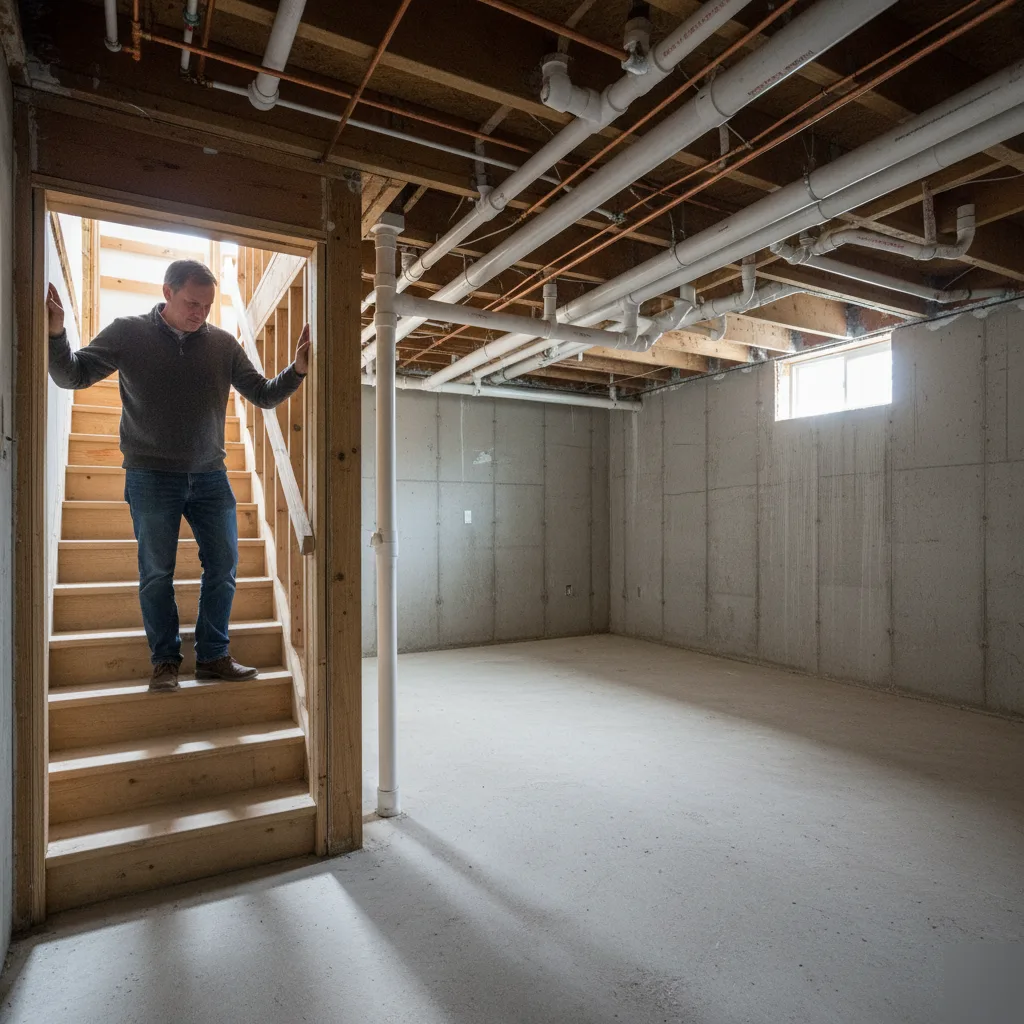
Plumbing Is the Biggest Cost Driver in Most Basement Finishes
When folks here in Brownsburg start asking about finishing a basement, they often wonder about the biggest expenses. The team finds the answer almost always points to the plumbing work. It's not the framing that costs the most. It's not the new flooring. It's not even all the electrical wiring. Instead, it's the work you can't see once the job is done that runs up the biggest bill. That tends to surprise a lot of homeowners, especially first-timers.
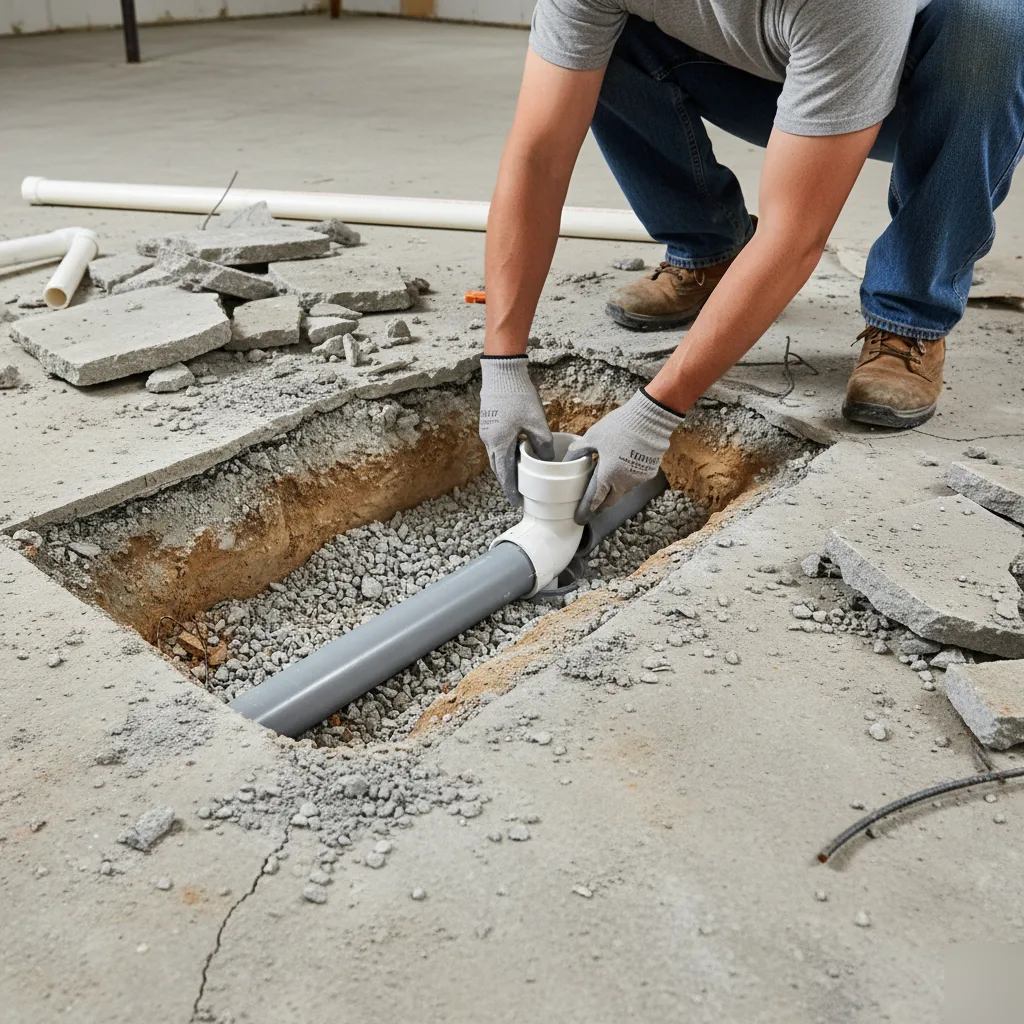
Here's why plumbing runs up the bill fast. Many homes in Brownsburg, those built over the last couple of decades and even some older ones, sit on concrete slab foundations. Most also have poured concrete basement floors. Adding a new bathroom, a wet bar, or even just laundry hookups down there means the crew has to cut into that concrete. That requires bringing in a heavy-duty concrete saw, breaking through the slab, then trenching for new drain lines. We then patch everything back together. This work is labor-heavy, messy, and it takes real skill to get right from the start.
What Makes Basement Plumbing So Different
Upstairs plumbing is a simpler thing. It usually runs through open walls and floor joists. But basement plumbing sits under solid concrete. The difference in difficulty is huge. A typical basement bathroom rough-in needs trenching for a toilet drain, a shower drain, and a sink line. Each pipe needs to tie into your home's existing sewer connection. This connection must have the right slope and the right depth. Most people don't realize how much goes into getting that slope right. If the drain pitch is off by even a fraction, you'll have slow drains or backups for years. We see concrete patched over drain lines that were never pitched correctly from the start, it's a big headache to fix later. A few key things push plumbing costs higher than other parts of a basement finish:
- Concrete cutting and removal creates a lot of debris. This material has to be hauled out and disposed of properly.
- New drain lines often need to connect 15 to 20 feet from the bathroom to reach the main sewer stack. That adds a lot of trenching.
- Brownsburg requires plumbing permits and inspections through Hendricks County, which adds time to the schedule. We handle all that paperwork.
- Some homes need an ejector pump if the main sewer line sits above the basement floor level.
That ejector pump situation is more common than you'd think here in Brownsburg. It shows up in neighborhoods near Arbuckle Acres and in the older sections of town, too. Homes built in the 1970s and 1980s often have main sewer lines that don't sit low enough for gravity-fed basement drains to work correctly. So the team installs a sealed pit with a pump that pushes waste up to the main line. It works dependably when done right, but it adds another layer to the project.
Why Skipping the Bathroom Doesn't Always Save You
Some homeowners think they'll just skip the basement bathroom to save some money. That's a fair thought. But a finished basement without a bathroom limits how your family can use the space. Guests head upstairs every time they need the restroom. And a basement bedroom without a nearby bathroom won't count as a legal bedroom, which matters for resale value down the road.
The plumbing rough-in really is the hardest part of the job. Once those lines are in the ground and inspected, the rest of the bathroom build moves fast. Tile goes in. The vanity goes in. Toilet installation is straightforward. These are simpler tasks compared to what's buried under the floor, out of sight. The National Association of Home Builders reports that plumbing work typically represents the single largest trade cost for below-grade remodeling projects. That tracks with what the team sees on job sites across Brownsburg every month.
So if you're planning a basement finish and want to understand where your money will go, start with the plumbing layout. Get that scoped out first. Everything else builds around it. If you're ready to talk through what your basement project might involve, reach out to the team today. You can also see how we handle a complete basement remodel from framing to final walkthrough.
Egress Windows and Electrical Work Add Thousands More
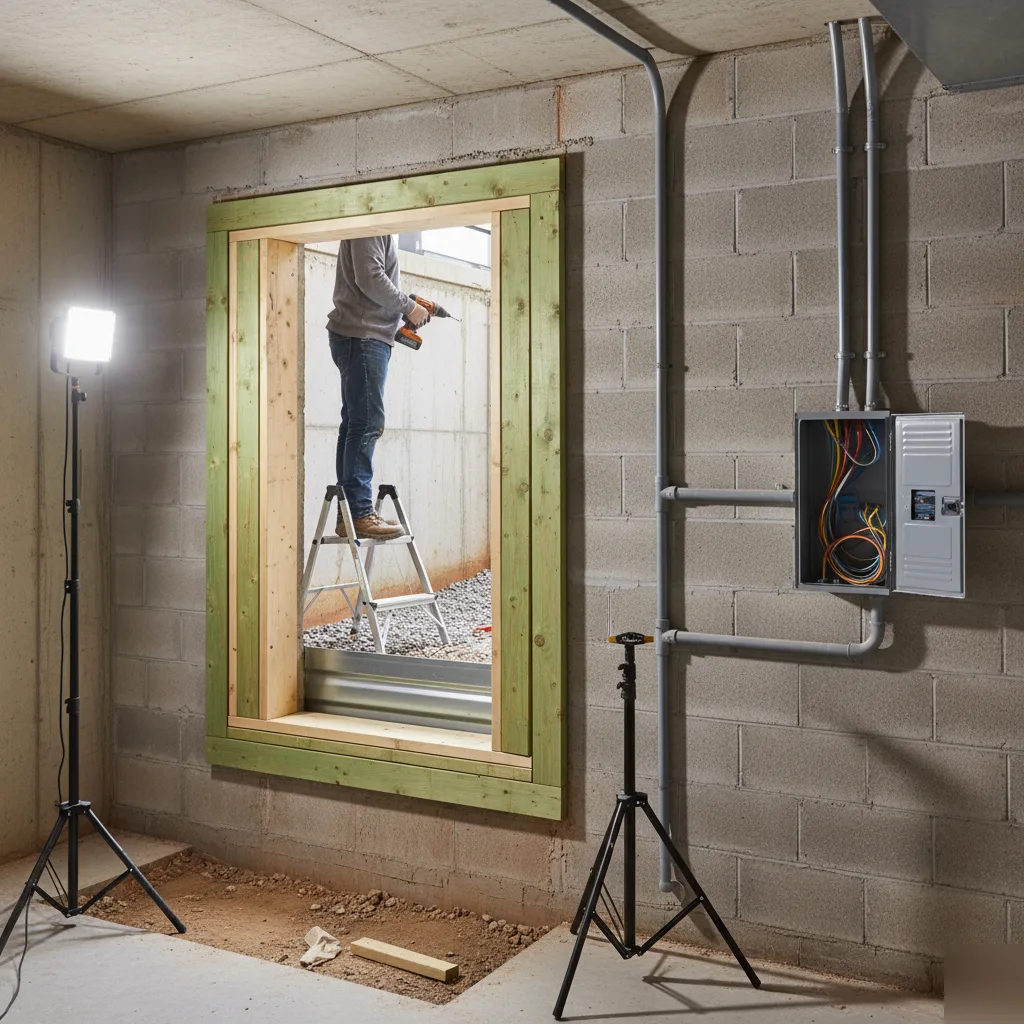
Most homeowners in Brownsburg focus on the big-ticket items like new bathrooms and framing. But egress windows and electrical work quietly eat through budgets faster than people expect. Together, these two line items can represent a real chunk of your total basement finishing cost. An egress window isn't optional if you're adding a bedroom. It's simply code. There's no way around it. Hendricks County follows Indiana Residential Code. This code requires any sleeping room below grade to have an egress window large enough for a person to climb through. That means cutting through your concrete foundation wall. We have to excavate outside, install a window well, and waterproof everything around the opening. This requirement catches homeowners off guard constantly. They plan for drywall and flooring but forget they need a concrete-cutting crew and an excavator in the yard before any of the finish work begins.
What Goes Into an Egress Window Install
Here's what the process actually looks like from start to finish. It's more involved than a simple window swap:
- A structural assessment of the foundation wall to confirm where a cut is safe to make. This prevents weakening the home.
- Excavation outside the home to create space for the window well. This is often done by hand or with small machinery.
- Concrete cutting through the poured or block foundation. It's loud, dusty, and precise work.
- Window frame installation using proper flashing and sealant to keep water out.
- Window well placement with drainage gravel and a well cover. This helps shed water away from the foundation.
- Interior framing and finishing around the new opening.
Every one of those steps involves a different skill set and a different piece of equipment. In Brownsburg, many homes sit on clay-heavy soil, especially near areas like the Northfield and Cardinal Estates subdivisions. Drainage around that window well matters more than usual here. Skip the gravel base or use the wrong drain tile, and you'll likely have water problems within a year. And that's a repair nobody wants to face.
Electrical Work Is the Other Surprise
Electrical runs a close second on unexpected costs. Most unfinished basements have a single circuit, maybe two. That's enough for a sump pump and a shop light. It's nowhere near enough for a finished living space. You'll need recessed lighting. You'll need outlets every twelve feet per code. Dedicated circuits are needed for a bathroom fan. Maybe a home theater setup too. The team often finds that the existing electrical panel needs an upgrade. Sometimes a subpanel is necessary. At least several new breakers are usually added. Older homes near Brownsburg's downtown core sometimes have panels already near capacity. Running new wire through finished walls and ceilings adds labor hours fast because the electrician has to fish wire through tight spaces rather than stapling it to open joists.
- Recessed lighting needs careful planning for insulation contact ratings and proper spacing.
- Bathroom circuits need GFCI protection and run on a dedicated 20-amp line.
- Any wet bar or kitchenette area needs its own circuit as well.
- Smoke and carbon monoxide detectors are required for any new habitable spaces.
Here's what most people don't realize until it's too late. Electrical rough-in has to happen before insulation and before drywall. If you change your mind about outlet or light placement after walls are closed up, the cost to fix it doubles. Planning the electrical layout early saves real money and prevents headaches later. We always make sure the homeowner has a clear picture of this.
One scenario the team runs into regularly: a homeowner wants a simple rec room, skips the egress window, and that's fine for code at that point. But then six months later they decide to convert it to a guest room. Now they're tearing out finished walls and cutting a foundation opening. That's a project within a project. It always pays to think ahead. Building smart from the start saves future pain.
Moisture and Waterproofing Are Prerequisite Costs in Brownsburg
Most homeowners in Brownsburg don't think about water until it's already a problem. But finishing a basement without addressing moisture first is like painting over rust. It looks fine for a month, then everything starts to fall apart. It's a waste of time and money, plain and simple.
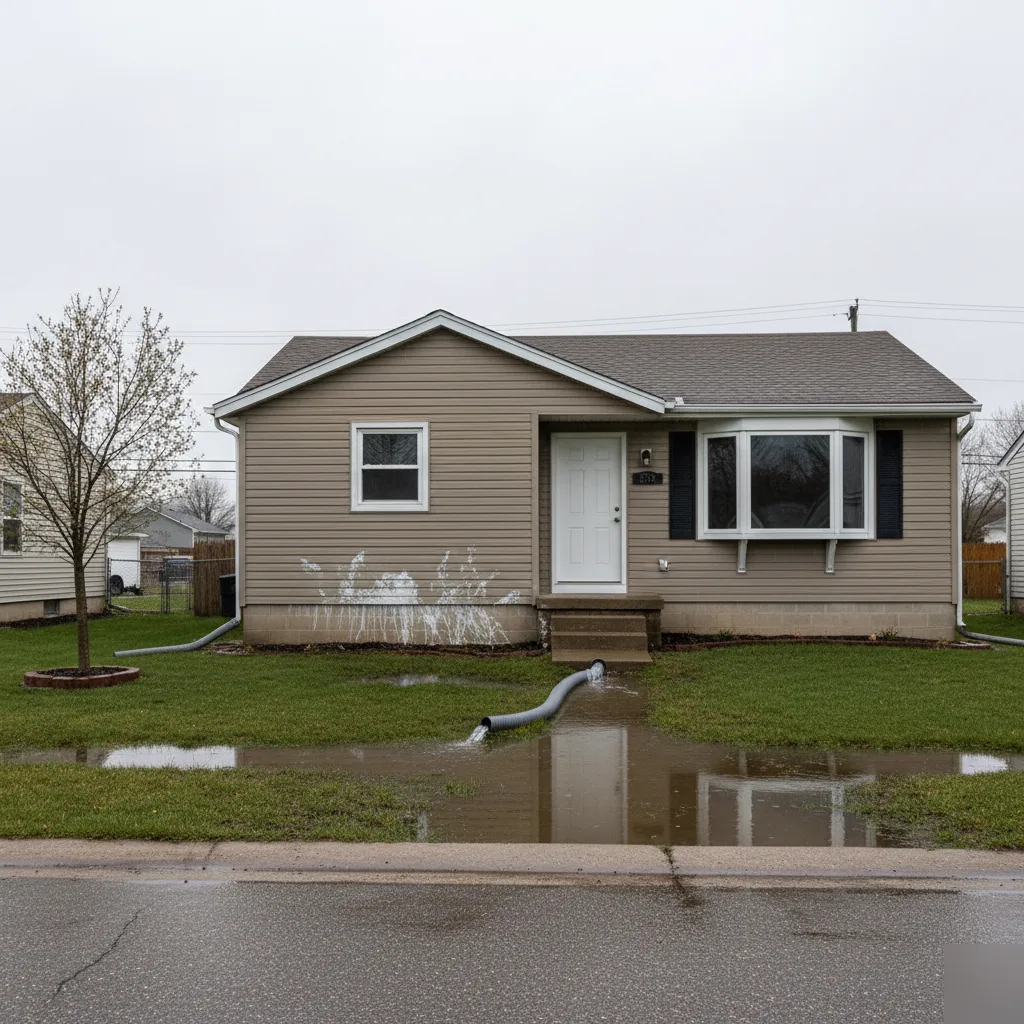
Brownsburg sits in Hendricks County on heavy clay soil. That clay holds water like a sponge. After a hard rain — and we get plenty of those in Central Indiana — hydrostatic pressure builds against your foundation walls. The team sees this constantly in neighborhoods near White Lick Creek and in older subdivisions off Green Street. Water finds its way in through cracks, seeps through floor joints, and even comes through the concrete itself as vapor. You can't just drywall over that and hope for good results; it's a recipe for trouble.
What Waterproofing Actually Involves
A proper waterproofing plan for a Brownsburg basement usually includes several layers of protection. Here's what a typical home needs before any framing starts:
- Inspect the foundation for active leaks, cracks, and signs of past water entry. This is step one for a reason.
- Install or repair an interior drain tile system along the basement perimeter. This diverts water away.
- Add a sump pump with a battery backup. Indiana storms knock out power regularly, so this is critical for peace of mind.
- Apply a vapor barrier or waterproof membrane on the walls and floor. This is your last line of defense.
- Test humidity levels over several days to confirm the space stays below 50 percent relative humidity.
Skipping any of those steps creates real risk for your newly finished space. And that risk gets buried behind finished walls where you can't see it growing.
Why This Cost Catches People Off Guard
Waterproofing isn't the fun part of finishing a basement. Nobody picks out sump pumps the way they pick out flooring. So it feels like a cost that shouldn't even be there. But moisture damage is the single fastest way to destroy a finished basement. Mold grows in 24 to 48 hours on wet drywall, according to the Environmental Protection Agency. Once mold takes hold behind a wall, the remediation cost far exceeds whatever you would have spent on prevention.
The team has opened up walls in Brownsburg basements where the homeowner finished the space years ago without waterproofing. We found black mold behind the insulation. Rotted bottom plates. Ruined carpet. The entire project had to be torn out and redone from scratch. That's real money lost, and a lot of frustration too. Indiana's freeze-thaw cycles make things worse. Concrete expands and contracts through winter, opening hairline cracks that weren't visible in summer. A basement that tested dry in July can easily leak in March. The team always recommends monitoring through at least one full season before calling a basement dry enough to finish.
The Reality
Waterproofing can represent a real portion of your total project cost. It depends on your foundation's condition, whether you need exterior drainage work, and how much water your lot collects. Homes in the Eagle Creek and Northfield neighborhoods of Brownsburg sit on slightly different grades, so the scope varies house to house. We always assess this thoroughly. Think of waterproofing as the foundation of your finished basement. It's not the exciting part. But it's the part that makes everything else last.
Before framing begins, proper insulation placement also plays a key role in moisture control — the basement insulation best practices guide from Building Science Corporation explains how insulation placement affects moisture movement in below-grade spaces. If you're planning a basement project and want to understand what your home actually needs, talk to the team about a basement assessment before you start picking paint colors. We're here to help.
Frequently Asked Questions
Why is plumbing the most expensive part of finishing a basement in Brownsburg?
Plumbing costs so much because it requires cutting through solid concrete. Unlike upstairs plumbing, basement drain lines go under the slab. That means bringing in a concrete saw, trenching for new pipes, and patching everything back up. Each drain line must connect to your home's main sewer stack with the right slope. Getting that pitch wrong causes backups for years. The labor is heavy, skilled, and time-consuming — and that's what drives the cost higher than any other trade on a basement finish.
Do Brownsburg homes really need an ejector pump for a basement bathroom?
Some Brownsburg homes do need an ejector pump, and it's more common than most people expect. Homes built in the 1970s and 1980s — including older sections of town and neighborhoods near Arbuckle Acres — often have main sewer lines that sit too high for gravity-fed basement drains to work. When that's the case, a sealed pit and pump push waste up to the main line. It works well when installed correctly, but it does add cost and complexity to your project.
Does Hendricks County require permits for basement plumbing and egress windows?
Yes, Hendricks County requires permits and inspections for both basement plumbing rough-ins and egress window installations. This applies to basement finishing projects in Brownsburg. Permits add time to the schedule, but they protect you. An inspected drain line gives you proof the work was done right. An inspected egress window confirms your basement bedroom meets Indiana Residential Code. Skipping permits can create serious problems when you sell your home. A good contractor handles all that paperwork so you don't have to worry about it.
Is it worth finishing a basement without adding a bathroom?
Skipping the bathroom saves money upfront, but it limits how useful your finished basement really is. Without a bathroom nearby, guests have to go upstairs every time. More importantly, a basement bedroom without a bathroom close by may not count as a legal bedroom under local code — and that can affect your home's resale value. The plumbing rough-in is the hardest part of the job. Once those lines are in and inspected, the rest of the bathroom build moves quickly. It's often worth doing it right the first time.
What's a common mistake homeowners make when budgeting for a basement finish in Brownsburg?
The biggest mistake is budgeting only for the visible work — drywall, flooring, and paint — while forgetting what's hidden. Concrete cutting, drain trenching, egress window excavation, and electrical panel upgrades all happen before any finish work begins. These behind-the-scenes steps are where the real money goes. Many homeowners in Brownsburg are surprised to learn that plumbing alone can be the single largest trade cost on a below-grade project.
Why does adding a basement egress window cost so much more than a regular window replacement?
An egress window is not a simple swap. It requires cutting through your concrete foundation wall, excavating outside the home, installing a window well with drainage gravel, and waterproofing the entire opening. A structural check of the foundation wall happens first to make sure the cut won't weaken your home. This is loud, precise, and physically demanding work. It's nothing like replacing a window in a wood-framed wall. Indiana Residential Code requires this window in any below-grade sleeping room, so there's no shortcut if you want a legal basement bedroom.