
Brownsburg, IN
Best Materials for Custom Cabinet Boxes in Brownsburg
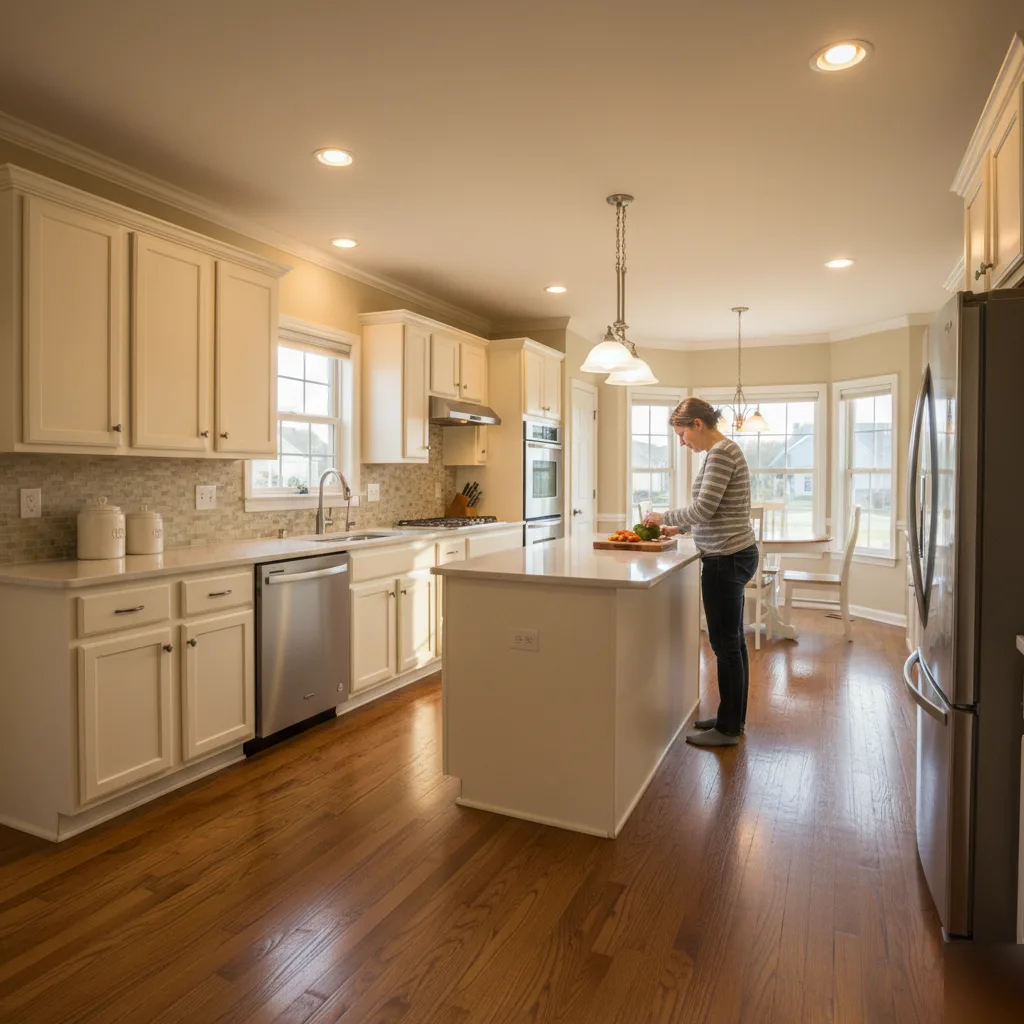
The Cabinet Box Is the Foundation of Every Custom Cabinet
Brownsburg homeowners spend a lot of time picking door styles and finishes. That makes sense. Doors are what you see every day. The style and color really set the tone for your whole kitchen. But the cabinet box behind that door? It does all the real heavy lifting. And if it fails, nothing else matters.
The cabinet box is the structural shell of your custom cabinetry in Brownsburg. It holds your shelves, your drawers, all your hardware. Think of it like the bones of a house. You can put beautiful siding on a weak frame. But eventually, the problems always show up. Sagging shelves are common. Doors won't close right. Joints start pulling apart at the corners. The team sees these issues regularly in older Brownsburg kitchens. Most of those original cabinet boxes were built from whatever material was at the time.
So, what material should custom cabinet boxes be made from in a Brownsburg home? The short answer is furniture-grade plywood. It handles weight. It resists moisture better than particleboard. And it holds screws tight for decades of use. But the full answer depends on your home's specific needs, and, this is the part most people overthink.
What the Box Actually Does
Your cabinet box carries serious weight. A full set of dinner plates can push 30 pounds on one shelf. Canned goods in a pantry cabinet add up fast, often hundreds of pounds. The box also anchors to your wall studs. So it needs to grip fasteners without splitting or crumbling over time. If those anchors fail, the whole cabinet can sag away from the wall.
Indiana homes deal with big humidity swings. Summers get muggy. Winters are bone dry. That matters more than most people realize when it comes to wood products. A cabinet box material that swells when it's humid and shrinks when it's dry will loosen joints within a few years. Brownsburg sits right in that Midwest climate zone. Seasonal moisture changes are a real factor in how long your cabinets last here. Your doors might look fine. But the box could be slowly falling apart inside.
And then there's the daily wear. Opening and closing doors, pulling out drawers. Kids hanging on cabinet fronts. These things all put stress on the box's structure. It needs to be tough.
Why Material Choice Gets Overlooked
Most homeowners don't think about box material. They focus on the visible parts of a kitchen remodel. The countertop. The backsplash. The cabinet door profile. The box material often gets decided without much thought. That's where corners often get cut, and it's a real shame.
Here's what the team has learned from years of building custom cabinets in Hendricks County homes:
- A weak cabinet box will start showing problems within 3 to 5 years, even with high-end doors and hardware attached to it.
- Particleboard boxes absorb moisture at cut edges, causing swelling near sinks and dishwashers. This creates nasty brown stains and makes doors stick.
- Plywood boxes hold up under load and resist the seasonal humidity changes common in central Indiana. They stay square.
- The box material affects how well soft-close hinges and drawer slides perform long term. A loose screw won't hold.
That last point surprises a lot of homeowners. Your fancy soft-close hinges need solid material to mount into. If the screw holes strip out because the box material is too soft, those hinges stop working properly. You end up replacing hardware that wasn't actually broken. You just needed better structural integrity in the first place.
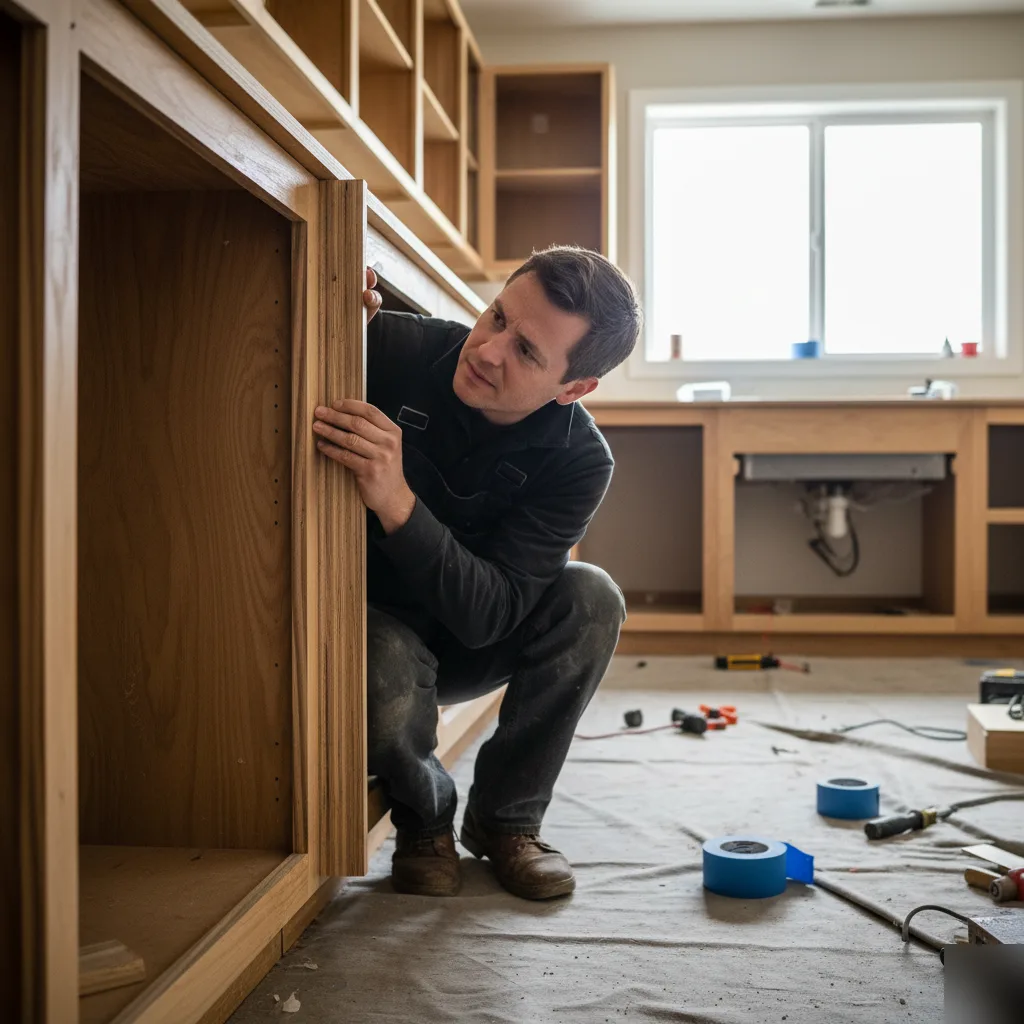
One Brownsburg kitchen the team worked on near Cardinal Park had cabinets that were only eight years old. The doors looked fine from a distance. But every box was particleboard. The sink base cabinet had swollen so badly the door wouldn't close. The entire lower section needed to be rebuilt from scratch, a complete redo of an otherwise decent kitchen.
That's a frustrating situation to be in. It's expensive. And it's completely avoidable.
Choosing the right box material upfront is one of the smartest decisions you'll make during a kitchen project. It doesn't get the attention it deserves. But it determines whether your custom cabinets still feel solid in 15 years or start falling apart in 5. If you're planning a cabinet project for your home, talk to the team about custom cabinets in Brownsburg before you lock in any decisions. We build trust before the first nail goes in, and that starts with good choices.
Plywood, MDF, and Particle Board Each Play a Different Role
Most homeowners lump all sheet goods together. That's a mistake. Each material has a specific job it does well. It also has a job it does poorly. Knowing the difference saves you from a kitchen that looks great for six months and then falls apart.
You'll see all three materials used in different parts of various cabinet systems. But for custom cabinet boxes, their roles really separate.
Plywood: The Workhorse
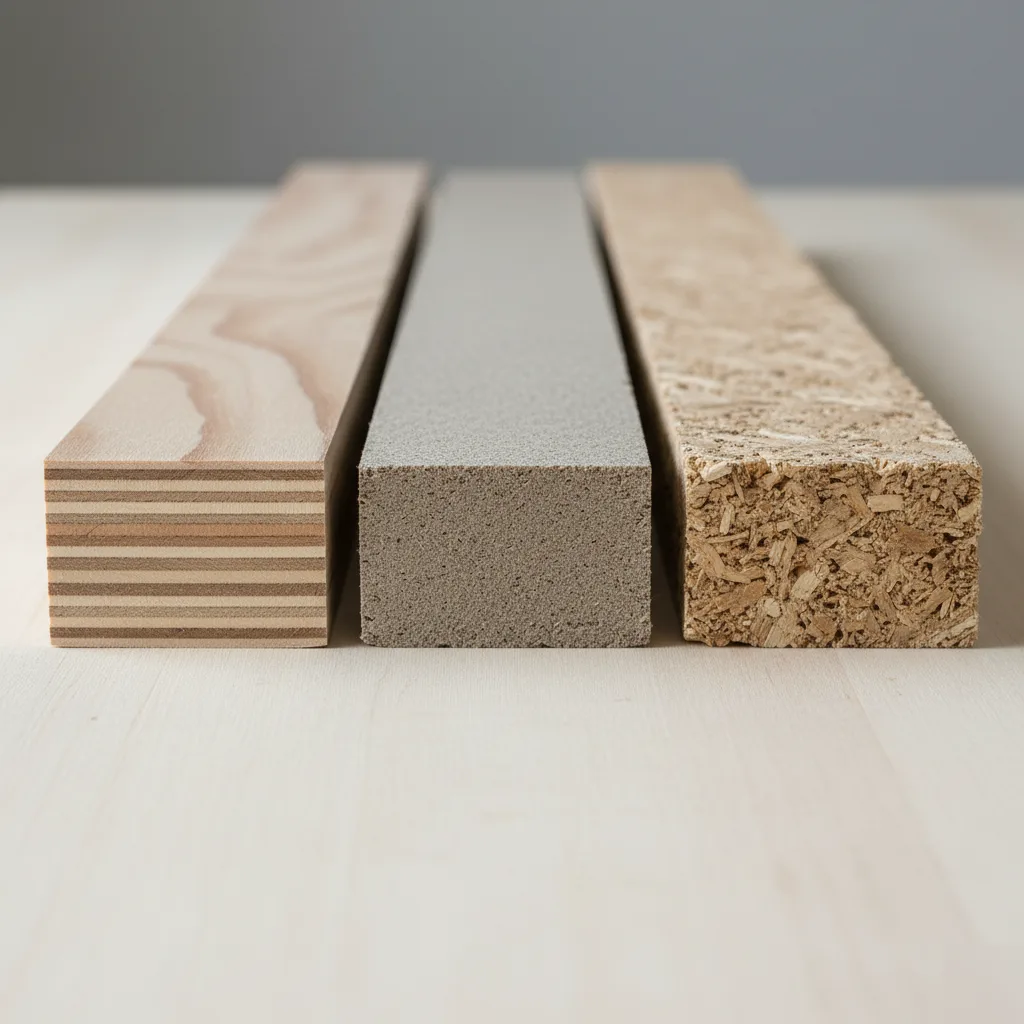
Plywood is layers of real wood. They are glued together. Those layers run in alternating directions, a clever way to build strength. That cross-grain structure gives it serious strength. It holds screws well. It resists warping. And it handles the weight of heavy dishes without sagging over time. For a working kitchen, that's what you need.
For custom cabinet boxes in Brownsburg homes, plywood is the go-to choice for good reason. Indiana's humidity swings from bone-dry winter air to sticky summer months. Plywood handles those shifts better than most alternatives. The layers move less. The team sees this firsthand in older homes near Arbuckle Acres and throughout the neighborhoods off Green Street. Plywood boxes from decades ago still hold up fine. You can tell they've been used, but they still work.
Cabinet-grade plywood typically comes in birch or maple veneer. It's smooth enough for a clean interior finish. And it takes paint or stain without fuss. You can wipe it clean. This material simply performs.
MDF: Smooth but Limited
MDF stands for medium-density fiberboard. It's made from wood fibers pressed together with resin under high heat. The result is a sheet that's perfectly flat and smooth. No grain pattern. No knots. It's almost too perfect.
That smoothness makes MDF great for painted cabinet doors. It also works well for decorative panels. But here's what most people don't realize until it's too late. MDF doesn't hold screws as well as plywood. It also swells big time when exposed to moisture. A slow leak under your kitchen sink can ruin an MDF cabinet box in weeks. We've seen it buckle and crumble. It just loses all structural integrity.
The team doesn't recommend MDF for the structural box itself. It has a place in custom cabinet projects, just not as the part that carries all the load. Use it for panels, for things that don't get wet or stressed.
Particle Board: Pick with Trade-Offs
Particle board is the lightest and least dense option. It's made from wood chips and sawdust bonded with adhesive. You'll find it in most mass-produced, ready-to-assemble cabinets from big box stores. It's a choice.
Is it usable? Sure. But it doesn't hold up under stress. Hinges loosen over time. Shelves bow under heavy loads, often with just everyday items. And moisture is its worst enemy. According to the Kitchen Cabinet Manufacturers Association, cabinet box material directly affects the lifespan and performance of the entire cabinet system. Particle board sits at the bottom of that performance range. This is not a knock on the material itself, it just has specific limitations.
So why does anyone use it? Cost. It's the option per sheet. But when you're investing in custom cabinet boxes for your Brownsburg home, saving a few dollars on box material usually means replacing things sooner. You're trading upfront savings for long-term headaches.
The truth is, homeowners in Brownsburg who value their investment often choose better. They want their cabinets to last. We've noticed that families here tend to stay in their homes for 5-15 years, so they really care about durability.
Quick Comparison
- Plywood: Strong screw hold. Resists moisture well. Handles Indiana's humidity swings without complaint.
- MDF: Perfectly smooth surface for paint. Poor moisture resistance. Weaker screw retention. Good for decorative stuff.
- Particle board: Lowest cost per sheet. Shortest lifespan. Most vulnerable to water damage. Will sag.
The right material depends on where it goes in the cabinet. Boxes need strength and moisture resistance. Doors and drawer fronts can use different materials for looks. That layered approach is something the team walks through with every homeowner during the planning stage. It's how you get cabinets that last 20 years instead of 7. You deserve that kind of value.
If you're starting to think about what goes into your project, the custom cabinets page breaks down the full process from design to install.
Plywood Is the Professional Standard for Cabinet Box Construction
Most homeowners in Brownsburg don't realize the box behind the door matters more than the door itself. The cabinet box carries every plate. Every cast iron skillet. Every stack of canned goods you bring home from Meijer. It holds the hinges. It anchors firmly to the wall. And when custom cabinet boxes are built from the wrong material, the whole kitchen starts to fail within a few years. It's just a recipe for trouble.
Plywood is what the team reaches for first. Every time. We think it's the only real choice for a quality build.
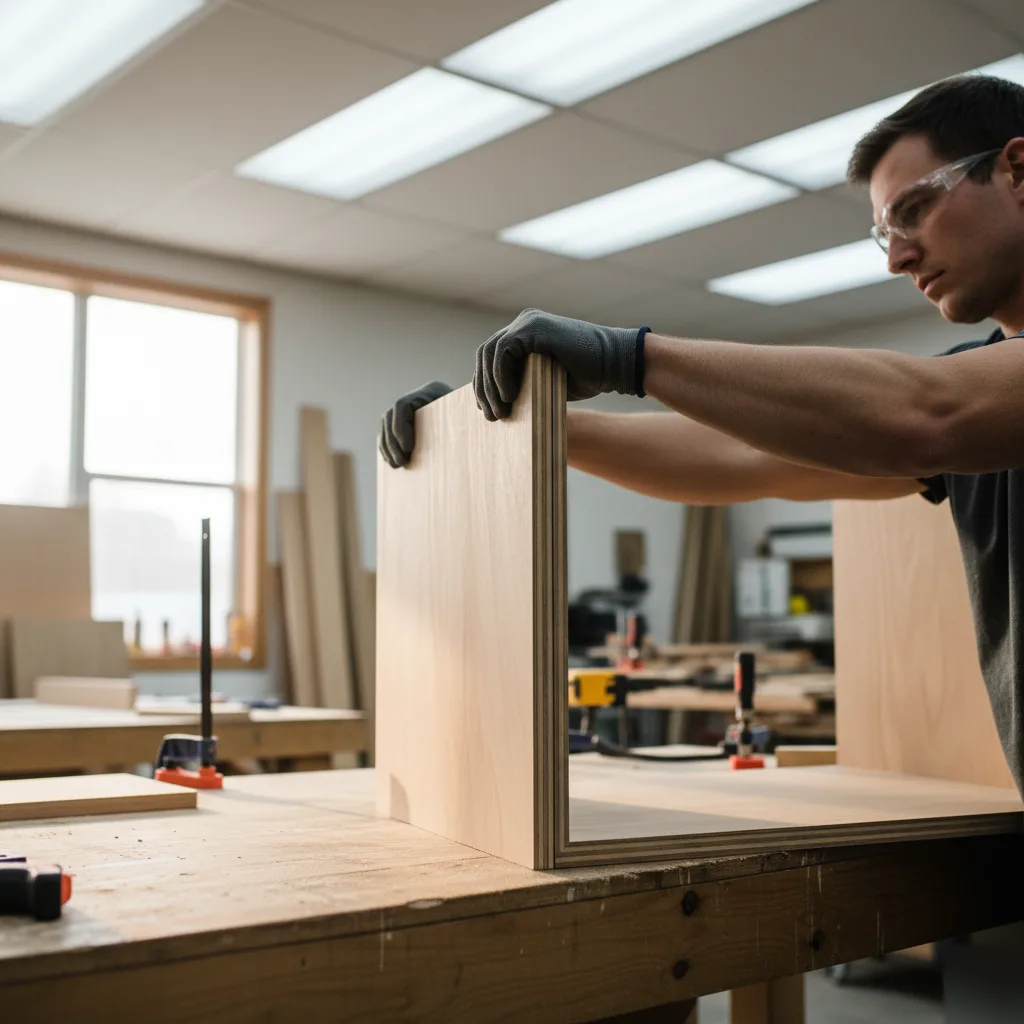
Here's why it earns that spot. Plywood is made from thin layers of real wood glued together. The grain alternates direction in each layer. That cross-grain structure gives it serious strength. A 3/4-inch plywood cabinet box can handle heavy loads without sagging, bowing, or pulling away from the wall. You get real peace of mind. According to the Architectural Woodwork Institute, plywood is the recommended material for premium-grade cabinetry. It offers dimensional stability and fastener-holding power. This means your cabinets stay square. And screws stay put.
What Makes Plywood Hold Up in Brownsburg Homes
Humidity swings are a real factor in Hendricks County. Summers get muggy. Winters dry out fast with the furnace running. That back-and-forth cycle causes cheaper materials to swell and shrink. Plywood handles it well because those alternating grain layers resist moisture movement in every direction. Cabinet boxes stay square. Doors keep closing flush. Drawers don't start sticking in July. You'll notice the difference right away.
The team has pulled out old plywood cabinet boxes from 1990s Brownsburg homes. They were still solid. Still holding screws tight. That kind of track record matters. It's important when you're investing in custom work for your kitchen or bathroom. This isn't just a temporary fix. This is built to last.
And by the way, with Brownsburg's newer housing stock, many homes are built quickly. Builders sometimes use entry-level materials. Upgrading cabinet boxes during a remodel is a smart move. It adds real value.
Not All Plywood Is the Same
This is where things get tricky. You'll hear "plywood" thrown around like it's one product. It's actually a whole category with big differences inside it.
- Birch plywood is the workhorse for cabinet boxes. It's strong. It takes finish well. And it holds screws without splitting.
- Maple plywood offers a harder surface. It works great when the interior of the box will be visible, like an open shelf cabinet.
- CDX or construction-grade plywood is meant for subfloors and sheathing. Never for cabinets. The voids inside the layers create weak spots. Your screws will not hold.
- Marine-grade plywood resists moisture even better. But it's usually overkill for most indoor cabinet projects. It costs a lot more too.
The grade stamped on the sheet tells you everything about the quality of the face veneers. It also indicates the number of voids between layers. Cabinet-grade plywood has minimal voids. That's what keeps screws locked in place for decades. It's a small detail. But it makes a huge difference over time.
But here's a detail most people miss. The thickness of the plywood matters just as much as the type. A 1/2-inch box might save a little on material. But 3/4-inch gives you a cabinet that feels solid when you open it. You notice the difference the first time you close a drawer. There's weight to it. There's confidence in that construction. We always aim for that feeling.
One thing the team sees often in older homes near Arbuckle Acres and along Green Street is cabinets that were built with the right doors on the wrong boxes. Beautiful faces hiding flimsy structures behind them. The shelves bow. The backs pull away. The boxes rack when you try to adjust the hinges. That's what happens when someone cuts corners on the part you can't see. And that's often where the frustration really starts for homeowners.
Plywood costs more than particleboard or MDF for cabinet boxes. That's just true. But the difference in how long your cabinets last, how they feel in daily use, and how well they hold up to the wear a real family puts on them makes it the clear choice for custom cabinet boxes in a Brownsburg home. Call us at (317) 523-8886 to get started on your project.
Frequently Asked Questions
Is plywood really better than particleboard for cabinet boxes in Brownsburg homes?
Yes, plywood is the better choice for cabinet boxes in Brownsburg homes. Brownsburg sits in a Midwest climate zone with big humidity swings between summer and winter. Particleboard absorbs moisture at cut edges and swells near sinks and dishwashers. Plywood handles those seasonal shifts much better. It holds screws tight, resists warping, and stays square under heavy loads. Particleboard boxes often show problems within 3 to 5 years. Plywood boxes can last decades with everyday use.
How does Brownsburg's climate affect what cabinet box material I should choose?
Brownsburg's Midwest climate creates real problems for weaker cabinet box materials. Winters are bone dry. Summers get muggy. That cycle of shrinking and swelling loosens joints over time. Materials like particleboard move more with humidity changes. Plywood moves less because of its cross-grain layer structure. Homes near Cardinal Park and throughout Hendricks County all deal with the same seasonal shifts. Choosing a stable material like furniture-grade plywood upfront protects your investment from Indiana's weather patterns year after year.
What is a common mistake homeowners make when choosing custom cabinet materials?
The most common mistake is focusing only on cabinet doors and finishes while ignoring the box material. The box is the structural shell that holds everything together. Many homeowners don't realize that weak box material causes soft-close hinges and drawer slides to fail early. Screw holes strip out in soft materials. Then hardware stops working properly. The box material is decided without much thought, and that's where corners get cut. Choosing the right box material upfront saves you from an expensive rebuild later.
What role does MDF play in custom cabinet construction?
MDF works best for specific parts of a cabinet, not the structural box itself. It has a very smooth surface that takes paint well. It's often used for door panels or decorative pieces where a flat, consistent finish matters. But MDF is heavy and does not hold screws as well as plywood under stress. It also absorbs moisture more easily when edges are exposed. For the cabinet box that carries weight and anchors to your wall, plywood is the stronger and more reliable choice.
How much weight can a cabinet box realistically hold, and does material affect that?
Yes, material directly affects how much weight a cabinet box can hold safely. A full set of dinner plates can push 30 pounds on one shelf. A pantry cabinet loaded with canned goods can hold hundreds of pounds total. Plywood handles that load without sagging because its cross-grain layers distribute weight evenly. Particleboard can sag or crack under the same load, especially over time. If you're planning a kitchen with heavy storage needs, talk to a professional about custom cabinets in Brownsburg to make sure your boxes are built for real-world use.
How do I know if my existing cabinet boxes are failing even if the doors still look fine?
Look past the doors and check the box itself. Common signs of a failing cabinet box include shelves that sag in the middle, doors that won't close or align properly, and joints pulling apart at the corners. Near sinks or dishwashers, watch for swelling, brown staining, or soft spots on the cabinet floor. These problems often show up in older Brownsburg kitchens where the original boxes were built from particleboard. The doors can look fine while the structure underneath is quietly falling apart.